


Bone fractures are among the most common reasons for emergency room visits. Whether caused by falls, accidents, or sports injuries, the speed and accuracy of diagnosis directly affects how well the bone heals.
A fracture that is properly identified, aligned, and stabilized in the first visit has a significantly better outcome than one that is missed, misaligned, or treated late.
In 2026, fracture treatment ER protocols rely on advanced imaging to diagnose breaks within minutes of arrival and a range of stabilization techniques to protect the bone before healing begins.
Why Fast Fracture Treatment Matters
A fracture is more than a crack in a bone. Depending on severity and location, it can involve damage to surrounding blood vessels, nerves, tendons, and soft tissue. Delayed or improper treatment can lead to:
- Malunion: It occurs when a bone heals in the wrong position, causing chronic pain, limited range of motion, or visible deformity.
- Nonunion: The bone fails to heal at all, sometimes requiring surgery months later.
- Compartment syndrome: Swelling within a muscle compartment cuts off blood flow, potentially leading to permanent tissue damage within hours.
Open fractures, where bone breaks through the skin, carry a high risk of infection and require immediate bone fracture emergency care to clean the wound, stabilize the bone, and start antibiotics.
These are not rare complications. They are predictable consequences of delayed care. That’s why fracture treatment ER protocols prioritize rapid imaging and immediate stabilization.
How ERs Diagnose Fractures: Imaging Technology
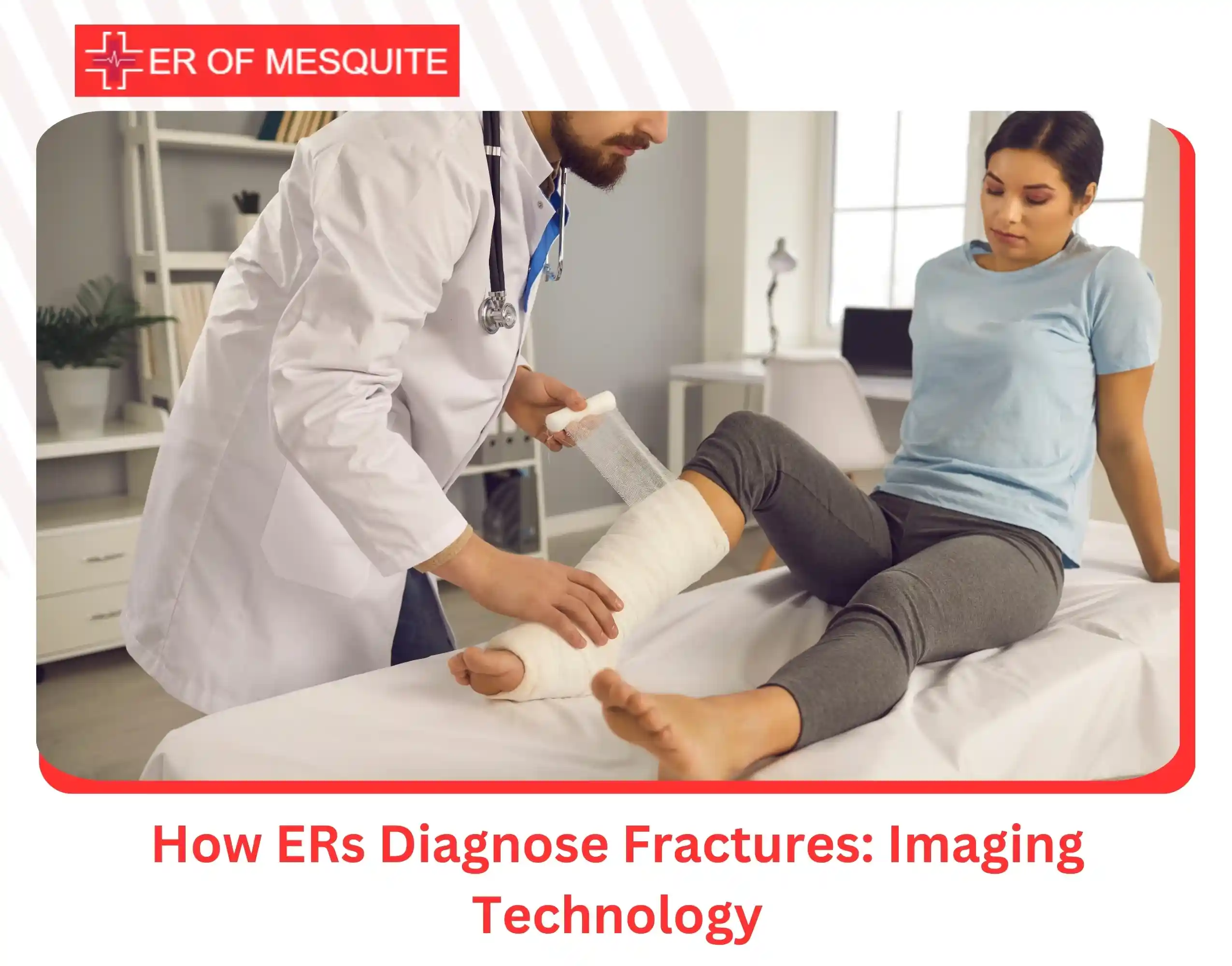
Accurate diagnosis is the foundation of every fracture treatment plan. Emergency physicians use a combination of imaging tools depending on the fracture location, severity, and complexity.
Digital X-Ray
Digital X-ray is the first-line imaging tool for suspected fractures in virtually every emergency room. It produces high-resolution images of bone in seconds, allowing physicians to confirm a break, assess alignment, and determine whether fragments have shifted.
Compared to older film-based X-ray, digital x-ray fractures diagnosis offers several advantages: faster image processing (results appear on screen in under a minute), higher image clarity that reveals hairline cracks film might miss, lower radiation exposure in many cases, and instant sharing with orthopedic specialists for consultation when needed.
At the ER of Mesquite, digital X-ray is available 24/7 with immediate physician interpretation. Most straightforward fractures are confirmed and treatment is underway within 15 to 20 minutes of walking through the door.
CT Scan for Complex Fractures
When an X-ray shows a fracture but doesn’t reveal the full picture, or when the break involves a joint, the spine, or the pelvis, a CT scan provides the detailed cross-sectional and 3D imaging needed to plan treatment accurately.
CT scanning is particularly valuable for:
- Joint fractures (wrist, ankle, knee) where alignment determines whether surgery is needed
- Spinal fractures where fragment position affects nerve safety
- Pelvic fractures from high-impact trauma
- Fractures where the X-ray looks normal but clinical suspicion remains high
CT imaging has become a standard part of fracture treatment ER workflows for any break that appears complex or involves areas where small misalignments carry large consequences.
Ultrasound
Point-of-care ultrasound is increasingly used in emergency settings, particularly for pediatric fractures and superficial bone injuries. It involves no radiation, provides real-time imaging at the bedside, and can confirm certain fracture types without waiting for X-ray availability.
Ultrasound is most useful for rib fractures, long bone fractures in children, and as a rapid screening tool when multiple injuries need simultaneous assessment. It complements rather than replaces X-ray in orthopedic ER treatment, but its speed and radiation-free profile make it valuable for young patients.
How Fractures Are Treated in the ER
Fracture treatment ER care focuses on three priorities: pain control, stabilization, and determining whether the patient can heal with immobilization alone or needs surgical intervention at a hospital.
Pain Management
Effective pain control is the first step. Untreated fracture pain is severe enough to cause shock, elevated blood pressure, and muscle guarding that makes examination and reduction difficult. Depending on the injury, pain management may include oral or IV analgesics, local anesthetic injection at the fracture site, or procedural sedation for reductions that require manipulation.
Immobilization and Stabilization
Once the fracture is confirmed and pain is managed, the bone needs to be held in the correct position to heal properly.
- Splints are the most common initial treatment in the ER. Unlike full casts, splints allow for swelling, which is expected in the first 48 to 72 hours. They are applied to stabilize the bone while providing room for tissue to expand without cutting off circulation.
- Casts may be applied for stable, non-displaced fractures where swelling is minimal.
- Braces and boots are used for certain ankle, foot, and wrist fractures that benefit from controlled mobility.
- Slings immobilize shoulder, clavicle, and upper arm injuries.
For dislocations that accompany fractures, emergency physicians perform closed reduction, manually realigning the joint under sedation or local anesthesia. This is a common procedure in bone fracture emergency care for sports injuries involving the shoulder, elbow, fingers, and ankle.
When Surgery Is Needed
Not all fractures heal with immobilization. Displaced fractures, open fractures, fractures involving joints, and breaks where fragments compromise blood flow or nerve function may require surgical fixation with plates, screws, rods, or external frames.
Freestanding ERs like ER of Mesquite do not perform surgery on-site. What we do is complete the diagnostic workup, stabilize the fracture, manage pain, and coordinate rapid referral to an orthopedic surgeon or transfer to a surgical facility. The imaging, lab work, and clinical documentation from your ER visit travel with you, so the surgical team doesn’t start from scratch.
For the majority of fractures, which are stable and non-displaced, the full episode of care is handled in the ER: diagnosis, reduction if needed, immobilization, pain management, and discharge with follow-up instructions.
What Happens During a Fracture Treatment ER Visit: Step by Step
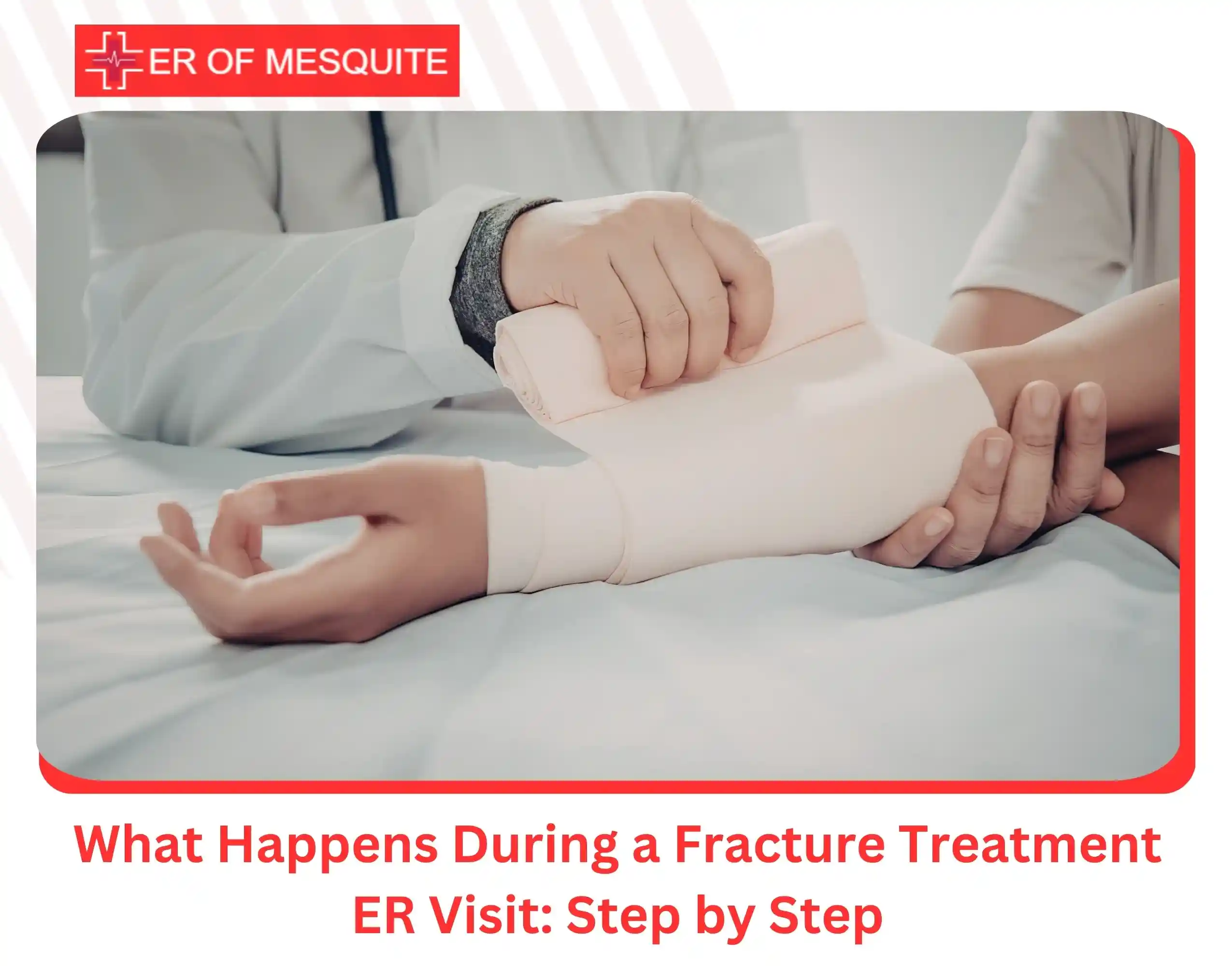
Knowing what to expect reduces anxiety, especially for parents bringing in a child with a suspected fracture.
- Immediate assessment: The injured area is visually assessed. Vital signs are taken. The physician checks for circulation, sensation, and movement below the injury site, which determines whether nerve or vascular compromise exists.
- Imaging: Digital X-ray is performed immediately. If the X-ray suggests a complex fracture, CT scanning follows. Results are available within minutes and interpreted at the bedside.
- Pain management (concurrent with imaging): Pain control doesn’t wait for imaging results. Analgesics are administered as soon as the patient is assessed. For severe pain, IV medication or nerve blocks may be given before or during the imaging process.
- Treatment decision: Based on imaging, the physician determines whether the fracture is stable (splint and discharge) or requires reduction, further imaging, or surgical referral.
- Stabilization and discharge or referral: The fracture is immobilized with the appropriate device. Patients receive discharge instructions including elevation, icing protocols, weight-bearing restrictions, signs to watch for (numbness, color changes, worsening pain), and follow-up scheduling with an orthopedic provider.
When to Go to the ER for a Fracture
Not every suspected fracture requires an emergency room visit. Minor bruising and mild pain after a bump may be evaluated by a primary care provider the next day. But certain signs indicate the bone needs immediate bone fracture emergency care.
Seek immediate orthopedic ER treatment if you notice:
- Visible deformity: a limb that looks bent, shortened, or rotated abnormally
- Bone visible through the skin (open fracture), which requires emergency wound management and antibiotics
- Inability to bear weight or move the injured limb
- Severe swelling with numbness, tingling, or loss of sensation below the injury
- A cold, pale, or blue limb, suggesting compromised blood flow
- Severe pain that is not responding to OTC medication
- Fracture in a child, especially if the mechanism of injury was significant (fall from height, impact during sports, car accident)
Waiting too long with a displaced fracture risks the bone beginning to heal in the wrong position. Waiting with an open fracture risks infection that could lead to bone loss. And waiting with signs of compartment syndrome can result in permanent muscle and nerve damage within hours.
Fracture Types Treated in the ER

Emergency rooms see every type of fracture, but some are more common than others:
- Transverse fractures: straight-line break across the bone, often from direct impact
- Oblique fractures: angled break, typically from a fall or twisting force
- Spiral fractures: twisting break that wraps around the bone, common in sports and falls
- Comminuted fractures: bone shattered into multiple fragments, usually from high-energy trauma
- Greenstick fractures: incomplete break common in children, where one side of the bone bends without fully breaking
- Avulsion fractures: a fragment of bone pulled away by a tendon or ligament, often from sudden force during athletics
- Compression fractures: vertebral fractures from axial loading, common in osteoporosis patients and falls
Each type requires specific imaging, alignment assessment, and treatment decisions. Digital x-ray fractures diagnosis identifies most of these on the initial scan. Complex or ambiguous cases get CT imaging for definitive characterization.
Key Takeaway
Fracture treatment ER care is built around speed and precision: fast imaging to confirm the break, immediate pain control, and proper stabilization to set the bone up for optimal healing. The diagnostic technology available in modern ERs, particularly digital X-ray and CT scanning, means most fractures are identified and treated within a single visit lasting under two hours.
ER of Mesquite provides 24/7 orthopedic ER treatment with on-site digital X-ray, CT, ultrasound, and a full clinical laboratory. Our board-certified emergency physicians handle fractures, dislocations, sprains, and acute joint injuries daily. Walk in anytime or call (214) 377-8495.
[Get Directions to ER of Mesquite]
Frequently Asked Questions
1. What Is the Fastest Way to Diagnose a Fracture in the ER?
Digital X-ray is the fastest and most widely used method. Images are produced in seconds, interpreted at the bedside, and treatment decisions follow immediately. For complex fractures involving joints or the spine, a CT scan provides the additional detail needed for accurate treatment planning.
2. Can All Fractures Be Treated Without Surgery?
Many fractures heal with immobilization alone, using splints, casts, braces, or slings. But displaced fractures, open fractures, joint fractures with misalignment, and breaks that compromise blood flow or nerve function often require surgical fixation. The ER’s role is to diagnose, stabilize, and determine which path is appropriate.
3. How Long Does Fracture Treatment ER Care Take?
Most straightforward fractures are diagnosed, treated, and discharged within one to two hours. Complex cases that require CT imaging, sedation for reduction, or surgical referral coordination may take longer.
4. Is Ultrasound Reliable for Detecting Fractures?
Ultrasound detects certain fracture types effectively, particularly in children and for superficial bones like ribs. It is radiation-free and provides real-time bedside imaging. In most orthopedic ER treatment protocols, ultrasound supplements X-ray rather than replacing it.
5. When Should I Take My Child to the ER for a Possible Fracture?
Take your child to the ER if there is visible deformity, inability to use the limb, significant swelling, or if the injury resulted from a fall, impact, or twisting mechanism with force. Children’s bones break differently than adults’, and some pediatric fractures (like greenstick and buckle fractures) require specific imaging angles to detect.