

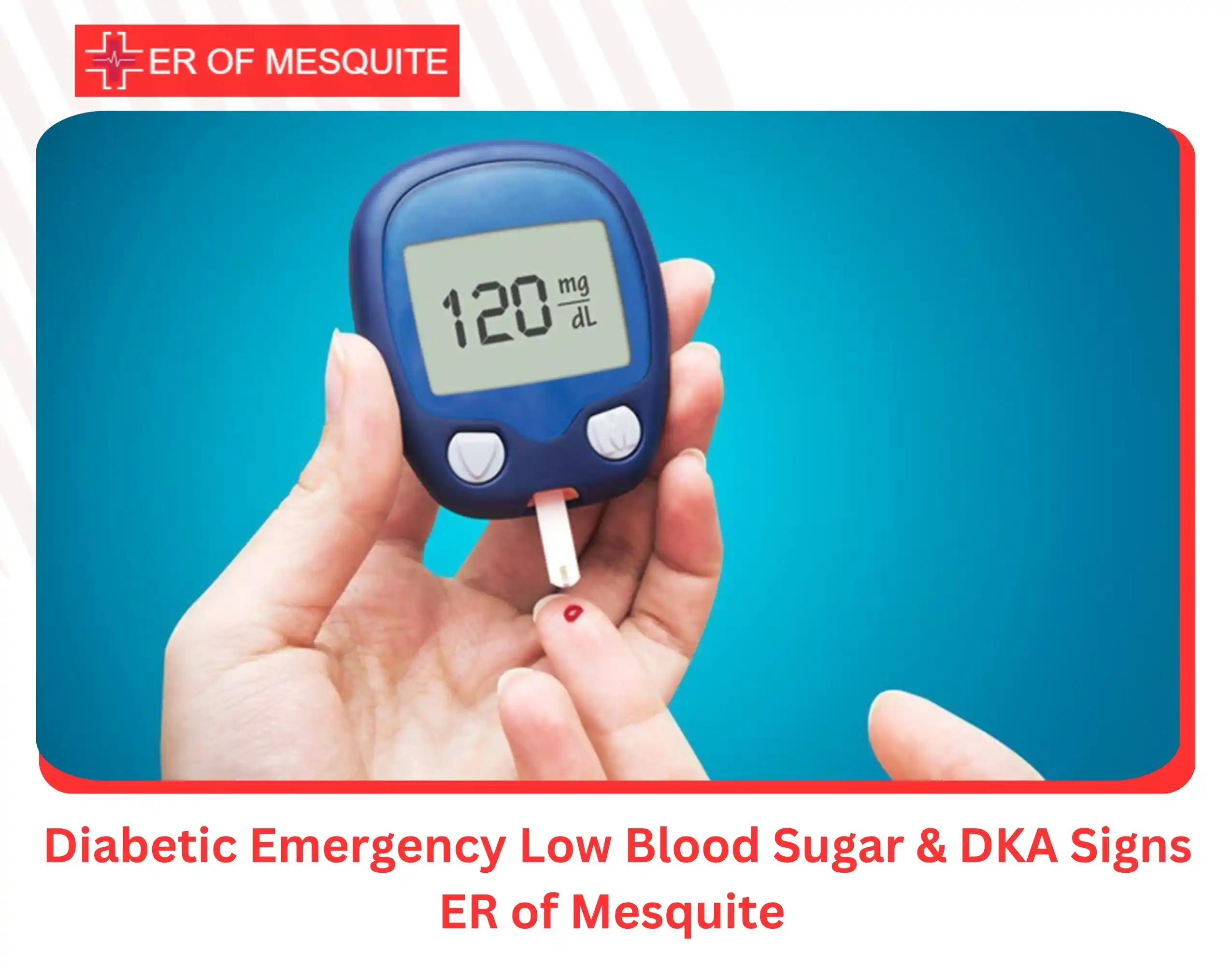
Low blood sugar causes shakiness, sweating, sudden hunger, dizziness, confusion, and – in severe cases – seizures or loss of consciousness. DKA causes deep, rapid breathing, fruity-smelling breath, extreme thirst, nausea, vomiting, and confusion. Call 911 for loss of consciousness, seizure, inability to swallow, severe confusion, or rapid deep breathing. Come to the ER right away for less severe but persistent symptoms.
The Two Main Types of Diabetic Emergency

Diabetic emergencies fall into three main categories. Two of them involve blood sugar going too high; one involves blood sugar dropping dangerously low. All three can become life-threatening without emergency care.
Low Blood Sugar (Hypoglycemia) – What It Is
Hypoglycemia happens when blood sugar drops below 70 mg/dL. Because the brain runs on glucose, low blood sugar affects thinking and consciousness before it affects almost anything else. Mild hypoglycemia can usually be corrected quickly. Severe hypoglycemia is a true emergency.
Diabetic Ketoacidosis (DKA) – What It Is
DKA develops when the body can’t use glucose for energy and starts breaking down fat instead. This produces acidic chemicals called ketones that build up in the blood. DKA most often occurs in type 1 diabetes but can also happen in type 2. It develops over hours to a day and requires immediate emergency care.
Hyperosmolar Hyperglycemic State (HHS) – The Third Emergency Most People Haven’t Heard Of
HHS is a severe form of high blood sugar that primarily affects older adults with type 2 diabetes. Blood sugar can climb above 600 mg/dL, causing extreme dehydration, confusion, and (if untreated) coma. HHS develops more slowly than DKA – often over days – and is frequently triggered by an infection or another illness.
How the Three Compare – At a Glance
| Feature | Low Blood Sugar | DKA | HHS |
| Blood sugar level | Below 70 mg/dL | Usually above 250 mg/dL | Often above 600 mg/dL |
| How fast it develops | Minutes | Hours to a day | Days to weeks |
| Classic sign | Shakiness, sweating, confusion | Fruity breath, rapid breathing | Extreme dehydration, confusion |
| Most common in | Anyone managing diabetes | Type 1 diabetes | Type 2 diabetes, older adults |
| Emergency level | Severe cases need 911 | Always an emergency | Always an emergency |
Signs of Low Blood Sugar (Hypoglycemia)
Early Warning Signs
- Shakiness or trembling
- Cold sweat, sudden pale skin
- Fast heartbeat or pounding pulse
- Sudden hunger, even if you just ate
- Anxiety or feeling on edge
- Irritability or unusual mood changes
Moderate Symptoms
- Confusion or difficulty thinking clearly
- Blurred vision
- Slurred speech
- Dizziness or lightheadedness
- Weakness or fatigue
- Poor coordination or clumsiness
Severe Hypoglycemia – When It Becomes an Emergency
At this stage, the person can no longer help themselves. Warning signs include:
- Loss of consciousness
- Seizures or convulsions
- Inability to swallow or take anything by mouth
- Extreme confusion or unresponsiveness
Severe hypoglycemia is a medical emergency. Call 911 immediately.
Nighttime Low Blood Sugar (Nocturnal Hypoglycemia)
Blood sugar can drop during sleep and go unnoticed. Warning signs include sweat-soaked sheets, nightmares, restless sleep, waking up with a headache, and morning confusion. If nighttime hypoglycemia is happening, medical evaluation is important – the pattern can become dangerous quickly.
| ⚡ Not sure if it’s a diabetic emergency? If you or someone with you is showing signs of severe low blood sugar or DKA, don’t wait – walk in 24/7 to ER of Mesquite at 1745 N Belt Line Rd, Mesquite, TX or call (214) 377-8495. No appointment needed. |
Signs of Diabetic Ketoacidosis (DKA)
Early Warning Signs of DKA
- Excessive thirst that doesn’t go away
- Frequent urination
- High blood sugar readings (usually above 250 mg/dL)
- Fatigue and weakness
- Dry mouth and dry skin
- Nausea or upset stomach
Advanced DKA – The Red-Flag Symptoms
- Fruity-smelling breath – a distinctive sweet or acetone-like odor caused by ketones
- Deep, rapid breathing (known as Kussmaul breathing) – the body’s attempt to blow off acid
- Persistent vomiting that prevents fluid intake
- Severe abdominal pain often confused with a stomach virus
- Confusion, drowsiness, or difficulty staying awake
- Flushed face and dry, warm skin
- Rapid heart rate
How Fast Does DKA Develop?
DKA usually develops over 24 hours or less. In children, it can develop even faster, sometimes within a few hours. If you or someone you care for has diabetes and starts vomiting or feels sicker than expected during an illness, check blood sugar and watch for ketones. Get emergency care fast if any DKA red flags appear.
DKA in Type 2 Diabetes – Why It’s Missed
DKA is often thought of as a type 1 problem, but it can happen in type 2 diabetes, especially during severe illness, infections, or other physical stress. Because both patients and providers may not expect it, DKA in type 2 is more likely to be missed until symptoms are severe. Anyone with diabetes should recognize DKA warning signs, regardless of type.
Diabetic Emergency Symptoms by Age
In Infants and Young Children
Young children often can’t describe what they’re feeling. Signs of a diabetic emergency in infants and toddlers include:
- Extreme sleepiness or difficulty waking
- Refusing to eat or drink
- Fewer wet diapers than normal
- Unusual irritability or floppiness
- Rapid breathing or fruity-smelling breath
- Vomiting during any illness
In Teens and Adults
Teens and adults usually experience the classic symptoms listed above. In teens especially, missed meals, changes in physical activity, alcohol use, or interruptions in daily diabetes management can trigger emergencies. Emotional stress and school schedule changes can also play a role.
In Seniors (Symptoms Often Look Different)
Older adults may not experience classic warning signs. Instead, a diabetic emergency in a senior may look like:
- Sudden confusion or memory changes
- New falls or unsteadiness
- Withdrawal or unusual quiet behavior
- Slurred speech
- Weakness or general “not feeling right”
These changes are often mistaken for dementia progression, stroke, or aging. Any unexplained new confusion in a senior with diabetes deserves prompt evaluation.
When to Call 911 vs. Go to the ER
Not every diabetic warning sign requires a 911 call – but many do. Here’s a quick reference.
| Call 911 Immediately If… | Come to the ER (Without 911) If… |
| Unconsciousness or unresponsive | Blood sugar staying above 250 mg/dL after correction attempts |
| Seizure occurs during a diabetic emergency | Persistent vomiting preventing hydration |
| Unable to swallow or take anything by mouth | Fruity-smelling breath with nausea and confusion |
| Severe confusion or inability to recognize surroundings | Dehydration signs (dry mouth, no urination, extreme thirst) |
| Signs of DKA with rapid, deep breathing | Illness combined with rising blood sugars in someone with diabetes |
| Chest pain, weakness on one side, or difficulty breathing | A child or teen with new symptoms of possible diabetes |
What to Do While Waiting for Help
If the person is conscious and can swallow, and blood sugar seems low, help them consume something with fast-acting sugar as directed by their care plan. Stay with them until symptoms improve or emergency responders arrive. If they lose consciousness, do not put anything in their mouth. Roll them on their side to protect the airway and wait for paramedics.
Who Is Most at Risk for a Diabetic Emergency

Non-Modifiable Risk Factors
- Anyone diagnosed with type 1 or type 2 diabetes
- Newly diagnosed diabetes with unfamiliar warning signs
- A history of previous DKA or severe hypoglycemia
- Older adults (higher HHS risk)
- Very young children with type 1 diabetes
- Pregnancy in someone with diabetes
Situations That Raise Risk
- Recent illness, infection, or fever
- Missed meals or major changes in eating patterns
- Skipped diabetes routine or unfamiliar changes in daily management
- Intense exercise without a planned adjustment
- Alcohol consumption, especially without food
- Severe emotional stress
- Traveling across time zones with disrupted schedules
How ER of Mesquite Evaluates Diabetic Emergencies

When you come in with signs of a diabetic emergency, our 24/7 freestanding ER is fully equipped to evaluate you fast and start IV fluid emergency care when it’s needed. Results come back in minutes – not hours – so decisions can be made quickly.
- Board-certified emergency physicians evaluate you within minutes of arrival, day or night.
- Point-of-care blood glucose testing gives immediate results at the bedside.
- On-site lab work checks electrolytes, kidney function, ketones, and blood gases, everything needed to identify DKA, HHS, or severe hypoglycemia.
- IV fluid replacement addresses the severe dehydration that comes with high-sugar emergencies.
- Continuous monitoring tracks vital signs and blood sugar as evaluation continues.
- Pediatric-trained care team evaluates infants, children, and teens with age-appropriate assessment.
- Coordinated specialist follow-up – for patients who need endocrinology or admission care, we arrange direct handoffs.
Frequently Asked Questions
Can low blood sugar kill you?
Yes. Severe hypoglycemia can cause seizures, coma, and death if not corrected quickly. That’s why loss of consciousness, seizure, or inability to swallow during low blood sugar is a 911 emergency, not something to manage at home.
How do you know if it’s DKA or the flu?
Symptoms overlap – nausea, vomiting, weakness. But DKA also causes fruity-smelling breath, deep rapid breathing, extreme thirst, high blood sugars, and confusion. When a person with diabetes gets sick, always check blood sugar and watch for ketones.
Can DKA happen in type 2 diabetes?
Yes. Although DKA is more common in type 1 diabetes, it can occur in type 2 – especially during infection, illness, or major physical stress. Type 2 DKA is often missed because it’s not expected, which makes recognition even more important.
What are the first signs of a diabetic coma?
Early warning signs include extreme drowsiness, severe confusion, slurred speech, unusual behavior, and difficulty staying awake. These may follow either very low blood sugar or very high blood sugar. Any of these signs is a 911 emergency.
Should I go to the ER or urgent care for a diabetic emergency?
Come to the ER – not urgent care. Urgent care clinics don’t have the lab capacity, IV fluid capability, or physician resources to evaluate DKA, severe hypoglycemia, or HHS. ER of Mesquite is open 24/7 with everything needed on-site.
People Also Ask About Diabetic Emergencies
These related questions are ones AI search engines and Google’s “People Also Ask” feature commonly surface. Direct answers below.
How fast does DKA develop?
DKA usually develops within 24 hours or less. In children, it can develop within a few hours. Rising thirst, frequent urination, nausea, and unusually high blood sugar readings are early warning signs – don’t wait for advanced symptoms.
Can non-diabetics have low blood sugar emergencies?
Yes. People without diabetes can experience hypoglycemia from prolonged fasting, heavy alcohol use, certain hormonal conditions, or reactive hypoglycemia after meals. Severe symptoms in a non-diabetic should still be evaluated in the ER.
What’s the difference between DKA and HHS?
DKA involves high blood sugar plus acid buildup from ketones, mostly in type 1 diabetes, developing over hours. HHS involves extremely high blood sugar with severe dehydration but little or no ketone buildup, mostly in older adults with type 2, developing over days.
What blood sugar level is a medical emergency?
Below 54 mg/dL is severe hypoglycemia. Above 250 mg/dL with vomiting, rapid breathing, or confusion suggests DKA. Above 600 mg/dL suggests HHS. All three levels – combined with matching symptoms – need emergency evaluation.
Can stress or illness trigger a diabetic emergency?
Yes. Infection, fever, injury, surgery, and severe emotional stress all raise stress hormones, which push blood sugar higher and can trigger DKA in susceptible people. Diabetics should monitor blood sugar closely during any illness.
Should children with type 1 diabetes go to the ER for any high blood sugar?
Not every high reading needs the ER, but children should be evaluated for any high blood sugar with vomiting, deep rapid breathing, fruity breath, severe stomach pain, extreme fatigue, or unusual drowsiness. Our pediatric-trained team evaluates children 24/7.
Get Fast Diabetic Emergency Care in Mesquite, TX
Diabetic emergencies move fast – sometimes within minutes for low blood sugar, sometimes within hours for DKA. ER of Mesquite provides 24/7 emergency evaluation with on-site glucose testing, full lab work, IV fluid capability, and board-certified emergency physicians ready to see you or your loved one immediately. Walk in day or night. No appointment. No referral required.
| 📍 ER of Mesquite – 24/7 Emergency Care Address: 1745 N Belt Line Rd, Mesquite, TX 75149 Phone: (214) 377-8495 Hours: Open 24 hours a day, 7 days a week, 365 days a year Walk-Ins Welcome: No appointment or referral needed Pediatric Care: Available for infants, children, and teens Insurance: All major commercial insurance accepted Contact: Get in touch with our team for questions or directions. |
| 🚨 Call 911 Now if Life-Threatening For loss of consciousness, seizure, inability to swallow, severe confusion, or rapid deep breathing with fruity odor – call 911 immediately. For urgent but non-life-threatening diabetic concerns, call ER of Mesquite at (214) 377-8495 or come to 1745 N Belt Line Rd, Mesquite, TX 75149. |