

Dizziness Emergency Room Care in Mesquite, TX
Staying upright is the easy part. ER of Mesquite runs every dizziness emergency room visit through blood pressure, heart rhythm, and blood sugar checks within minutes, because what nearly put you on the floor is the part worth explaining.
Whether it’s a single spell of vertigo and dizziness or a pattern of dizzy spells that keeps returning, our onsite lab and EKG catch what a wait-and-see approach can miss. Most patients get a working answer inside the hour, not a discharge sheet that says come back if it happens again.
Call Now: (214) 377-8495
Hours: Open 24/7, walk-ins welcome
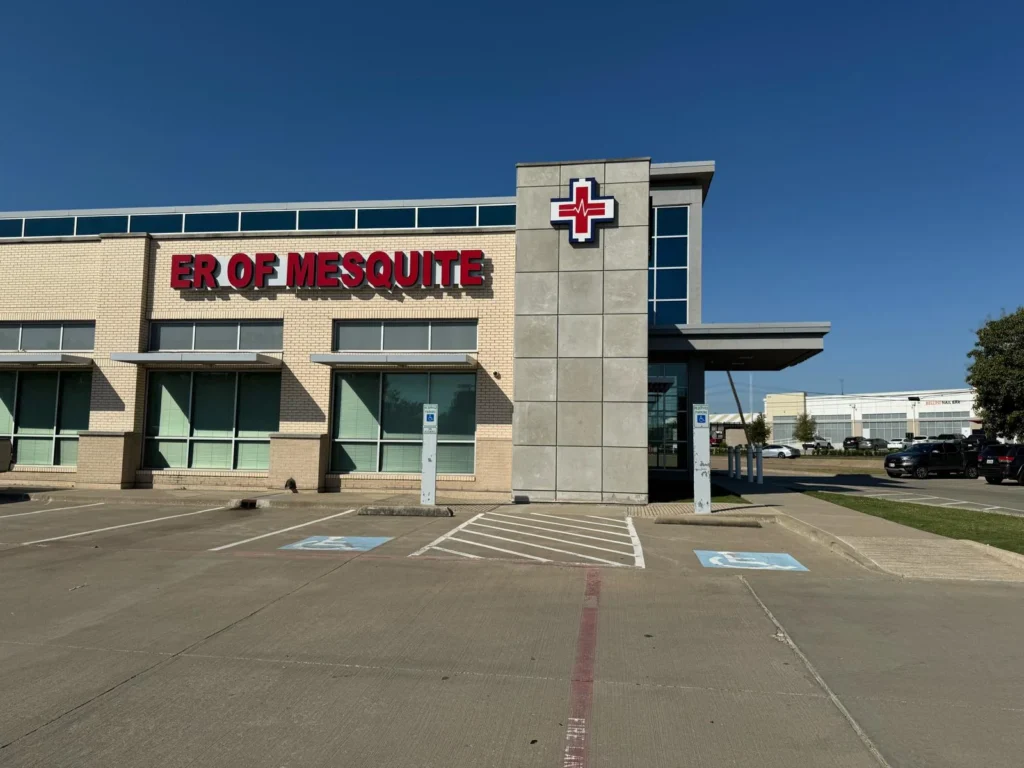
Walk-In: 1745 N Belt Line Rd, Mesquite, TX 75149
When Dizziness Signals Something More Serious

Most dizzy spells pass on their own and don’t need an ER visit. But when dizziness and lightheadedness show up with other symptoms, especially a sudden onset, they can point to something urgent enough to need a same-day evaluation rather than a wait-and-see approach.
- Chest pain, pressure, or shortness of breath alongside the dizziness
- One-sided weakness, numbness, or facial drooping, even if it passes quickly
- Slurred speech or sudden trouble finding words
- Fainting or loss of consciousness, even for a few seconds
- Sudden dizziness and weakness together, especially without a clear trigger like standing up too fast
- Severe headache unlike any you’ve had before
- Vomiting that won’t stop or a high fever with the dizziness
The sign people misread most often: dizziness that eases the moment you lie down still deserves a same-day evaluation if it keeps returning. A pattern that repeats is data, not bad luck. If you notice the stroke signs above, call 911 instead of driving yourself in; paramedics can start treatment before you arrive. If any of these signs match what you’re experiencing right now, don’t search for a dizziness ER near me and start reading reviews. Come in or call.
When a Dizzy Spell Becomes a Fall Risk
A dizzy spell that lasts thirty seconds can still end in a broken wrist, a cracked hip, or a head injury if it catches you on stairs or in the shower. For a meaningful share of ER visits, the fall caused by the dizziness turns out to be the more serious problem than whatever caused the dizziness itself.
New medication, low blood sugar, dehydration after a stomach bug, an inner ear flare, or simply standing up too fast can all trigger a dizzy spell strong enough to take your legs out from under you. Anyone can be affected, but the risk climbs with age, with a new prescription, or with a fever that’s already left you weak.
At ER of Mesquite, a dizziness emergency room visit covers both halves of the problem: what caused the spell, and whether the spell already caused an injury that needs its own treatment. If you came in after a fall, we check for fractures and head injury alongside the underlying cause, not as an afterthought. That combination, cause and consequence, in a single visit, is what a same-day evaluation should give you.

Why We Check Your Blood Pressure Three Times, Not Once

A single blood pressure reading, taken while you’re lying down, can look completely normal even when your body is struggling to keep blood moving to your brain. That’s why every dizziness ER near me visit at our facility includes blood pressure and pulse checks lying down, sitting, and standing.
- Lying down: your baseline, taken within the first few minutes of arrival.
- Sitting up: a checkpoint that catches a slower drop some patients don’t feel right away.
- Standing: the position where a drop of 20 points systolic or 10 points diastolic points toward orthostatic hypotension, a common and treatable cause of dizzy spells that a single seated reading would miss entirely.
Paired with a quick blood sugar check and an EKG, these three readings often point straight to the cause before any lab result comes back, which is why this step happens before almost anything else. It takes under two minutes and costs nothing extra, yet it’s a step some urgent care clinics and even busy ERs skip when the waiting room is full. We’d rather take the extra ninety seconds than send you home with half the picture.
What Happens When You Arrive
From the moment you walk in, a dizziness emergency room visit follows a set sequence built to find the cause fast, not guess at it. Here’s what most patients go through in their first hour, start to finish.
Triage & Vitals
Including the lying, sitting, and standing blood pressure check described above, plus oxygen level and blood sugar.
Focused Exam
Checking balance, coordination, eye movements, and strength on both sides of your body.
EKG
To rule out a heart rhythm problem behind the dizziness.
Lab Work
Including a metabolic panel that checks sodium, potassium, and other electrolytes, plus a complete blood count.
CT Scan
If your exam or history points toward a neurological cause.
Physician Evaluation & Plan
Whether that's IV fluids, medication review, referral for further workup, or coordination with a specialist if the cause needs it.
Most patients have a working answer within the hour. If something requires a higher level of care, we stabilize you and coordinate the transfer ourselves, already diagnosed and already started on treatment. Bring your medication list if you have one. It often turns out to be the biggest clue in the room.
How We Treat Dizziness at ER of Mesquite
Treatment depends entirely on what the workup finds, since dizziness itself is a symptom, not a diagnosis. Once we know the cause, treatment usually starts in the same visit rather than waiting for a follow-up appointment. Here’s how the most common causes get handled.
Dehydration or Electrolyte Loss
IV fluids correct volume and electrolyte levels faster than drinking fluids alone, especially if vomiting or diarrhea caused the electrolyte imbalance.
Low Blood Sugar
Treated immediately, then investigated further if it wasn't explained by a missed meal or medication timing.
Irregular Heart Rhythm
Confirmed on EKG and managed with cardiac monitoring, medication adjustment, and coordination with cardiology when needed.
Inner Ear Causes (BPPV)
Vertigo and dizziness from BPPV often improve with a specific positional maneuver performed at bedside, no surgery or medication required.
Medication-Related Dizziness
Reviewed against your full medication list, since a dose change or drug interaction is sometimes the simplest fix of the visit.
If your cause needs a specialist we don’t have onsite, we coordinate that referral directly instead of handing you a list to call yourself.
Why Choose ER of Mesquite
For dizziness and lightheadedness, delay rarely helps and often hides a cause that’s easier to treat early, before a spell turns into a fall. Here’s what sets a dizziness emergency room Mesquite visit with us apart:
Orthostatic Vitals on Every Visit
Lying, sitting, and standing blood pressure checks, not just one reading.
Onsite CT, EKG & Full Lab Panel
Answers come from testing, not guesswork, all under one roof - CT and a full lab panel.
Board-Certified Physicians
Around the clock. No urgent care handoff, no second visit for imaging.
Fall-Related Injury Checked
If a dizzy spell already caused a fall, we evaluate both at once, in the same visit.
Direct Specialist Coordination
Cardiology or ENT referrals arranged by our team, not left to you.
Care That Fits Your Budget
We accept most major insurance plans and offer flexible payment plans through Sunbit.
For billing queries, contact our billing department at:
Phone: (817) 785-8000
Email: info@aimbillingsolutions.com
Dizziness ER Near You in Mesquite

Searching for a dizziness emergency room near you? ER of Mesquite sits on N Belt Line Road, serving Mesquite and the surrounding East Dallas County communities of Balch Springs, Garland, Sunnyvale, Rowlett, and Dallas. We’re open 24/7, including every holiday, with walk-in registration and no appointment required.
Whether it’s 2 a.m. or the middle of a Sunday afternoon, the same testing and the same physicians are on hand for every search that ends with us.
If you’re not sure whether tonight is the night to come in, that uncertainty is itself a reason to get checked rather than wait it out at home.
Find the Cause Before It Finds the Ground
A dizzy spell that resolves on its own can feel like nothing to worry about, right up until the next one doesn’t. Most causes of dizziness are treatable once identified, and identifying them usually takes less time than the worry does.
A dizziness emergency room Mesquite visit at ER of Mesquite runs on the same testing any hour, any day, with no appointment needed. Walk in, or call ahead so we’re ready when you arrive.
Call Now: (214) 377-8495
Hours: Open 24/7, walk-ins welcome
Walk-In: 1745 N Belt Line Rd, Mesquite, TX 75149
Frequently Asked Questions
Can a new medication cause sudden dizziness and weakness?
Yes. Blood pressure medications, sedatives, antidepressants, and several antibiotics can all cause sudden dizziness and weakness, especially soon after a new prescription or dose change. Bring your medication list. Reviewing it against your symptoms is often the fastest way we find the cause, sometimes without additional testing.
Is it safe to drive myself to the ER if I'm dizzy but stable?
Only if your symptoms are mild, brief, and fully resolved, with none of the red flags above. If you’re still unsteady, still symptomatic, or unsure, have someone else drive you or call us. Driving while genuinely dizzy puts everyone on the road at risk, not just you.
I already fell because I got dizzy. Should I still come in even if I feel okay now?
Yes, come in. A fall from a dizzy spell can cause a fracture, concussion, or internal bruising that doesn’t hurt right away, especially in a hip or wrist. We check for injury with imaging while also investigating what caused the dizziness, so neither one goes unanswered.
Can low blood sugar cause dizziness if I'm not diabetic?
Yes. Skipping meals, drinking alcohol on an empty stomach, or exercising harder than usual can all drop blood sugar low enough to cause dizzy spells, shakiness, and confusion in people without diabetes. A quick finger-stick test during triage confirms it, and treatment usually resolves symptoms within minutes.
Why do I get dizzy when I stand up too fast?
Standing up drops blood pressure briefly while your body adjusts, and most people never notice it. If the adjustment is slow, blood flow to the brain dips just long enough to cause a head rush. It’s usually harmless, but frequent or severe episodes deserve a look at hydration and medications.
Does a dizzy child need the same evaluation as a dizzy adult?
Yes, though causes differ. Dehydration, ear infections, and low blood sugar are more common triggers in kids than the cardiac or neurological causes we screen for more heavily in adults. We treat pediatric dizziness with the same urgency, adjusted testing, and a calmer pace suited to a nervous child.
Do you accept walk-ins for dizziness, and do you take my insurance?
Yes. Walk in any hour without an appointment for a dizziness emergency room visit. We accept most major insurance plans and offer flexible payment plans through Sunbit, and Texas law requires emergency visits to be processed at in-network benefit levels.