

Gallbladder Attack Treatment in Mesquite, TX
A gallbladder attack turns into an emergency when the stone stays stuck or moves somewhere worse. Gallbladder attack treatment at ER of Mesquite starts by finding out which one is happening: onsite ultrasound shows the gallbladder itself, and lab work checks the liver, bile ducts, and pancreas for signs the stone has traveled. IV pain relief begins while the answers come back, usually within the hour. If you need a surgeon, we confirm the diagnosis first and arrange the next step directly.
Call Now: (214) 377-8495
Hours: Open 24/7, walk-ins welcome
Walk-In: 1745 N Belt Line Rd, Mesquite, TX 75149
What a Gallbladder Attack Usually Feels Like
Most people describe a deep, steady ache under the right rib cage or in the upper middle of the belly, often an hour or two after a heavy or fatty meal. It frequently starts in the evening or wakes you at night. The pain can reach around to the back or up to the right shoulder blade, and it rarely eases by changing position the way gas pain does.
Nausea and vomiting are common. So is the feeling that you can’t take a full breath without the pain catching.
That pattern, pain under right rib cage that builds over minutes and then holds steady, is the classic gallstone attack. Our guide to gallstones covers who gets them and why. What matters tonight is how long the pain has lasted and what’s come with it.

When an Attack Stops Being Just an Attack

A simple gallbladder attack happens when a stone briefly blocks the gallbladder’s outlet. When the stone slips back, the pain fades. The clock is one of the most useful clues to whether that’s still what’s going on.
Under an hour or two, then gone. This is the typical pattern of an uncomplicated attack. It still deserves a doctor’s visit soon, because attacks tend to return.
Past four to six hours and not letting up. Pain that lasts this long suggests the stone is stuck and the gallbladder wall is becoming inflamed. An inflamed gallbladder doesn’t settle on its own and needs to be seen the same day.
Fever or shaking chills with the pain. Infection may be setting in, either in the gallbladder or in the bile ducts below it.
Yellow eyes or skin, tea-colored urine, or pale stool. The stone may have slid into the main bile duct and blocked the flow of bile out of the liver.
Pain that bores straight through to the back with repeated vomiting. A stone can block the duct shared with the pancreas and set off pancreatitis.
If your gallbladder pain sits in any of the last four rows, it’s no longer a wait-and-see situation.
Where the Stone Goes Decides the Emergency
The same small stone causes very different problems depending on where it lodges. This is how we sort them out.
| Where the stone is | What you're likely to notice | What we check |
|---|---|---|
| Briefly at the gallbladder's outlet | Hours of pain that fade | Ultrasound for stones; normal labs |
| Stuck at the outlet | Pain past several hours, often with fever; an inflamed gallbladder | Ultrasound for a thickened wall and fluid; white blood cell count |
| In the main bile duct | Yellowing, dark urine, pale stool, itching | Liver enzymes and bilirubin; ultrasound for a widened duct |
| In the bile duct with infection | Fever, yellowing, and pain together; confusion in older adults | Blood counts, cultures, and close monitoring for sepsis |
| Blocking the pancreas's duct | Severe upper pain through to the back, vomiting | Lipase level, and CT when the picture is unclear |
The fourth row is the one we move fastest on. An infected, blocked bile duct can lead to sepsis, and it needs antibiotics started in the ER and a specialist procedure at a hospital soon after.
What Happens When You Walk In
Gallbladder attack treatment and testing run side by side here, so you’re never waiting on results to feel better.
- Pain relief and an IV come early. Nobody needs to sit through a gallbladder attack to prove it to us, and treating pain doesn’t hide the diagnosis.
- Labs go to our onsite lab. Blood counts, liver enzymes, bilirubin, and lipase show whether the stone has moved and whether infection has started. Women of childbearing age get a pregnancy test.
- Ultrasound looks at the gallbladder directly. It’s the first-choice test for stones and inflammation, and our ultrasound runs onsite with no radiation. CT is added when pancreatitis or another cause is in question.
- An EKG when the pain could be cardiac. Upper belly pain in an adult with heart risk factors gets checked from both directions.
Most patients have a clear answer before the second hour.
Gallbladder Attack Treatment, Start to Handoff

When the ultrasound shows stones but no inflammation and your labs are normal, the attack has passed. You’ll leave with the pain under control, guidance on what to eat for the next several days, and a referral to a surgeon to talk about removing the gallbladder before the next attack, which is likely.
An inflamed gallbladder, a blocked bile duct, or pancreatitis from a stone is a different visit.IV fluids, anti-nausea medication, and pain control start here, along with IV antibiotics when infection is present. We do not perform gallbladder surgery or bile duct procedures, and we’re upfront about that. What we do is confirm the diagnosis, stabilize you, and arrange the hospital transfer with your ultrasound and lab results sent ahead, so the surgical team starts treatment instead of repeating the workup.
If the ultrasound is clear and the pain points elsewhere, our broader stomach pain evaluation takes over in the same visit.
Why Patients Choose ER of Mesquite
- Ultrasound without a referral or a wait for an appointment, any hour of the day, as a standard part of gallbladder attack treatment.
- The full lab picture at once. Liver, bile duct, pancreas, and infection markers in a single draw.
- Honest triage. If it was a passing attack, you’ll hear that plainly. If it needs a surgeon tonight, you’ll hear that too.
- A transfer that saves time, with your diagnosis confirmed and records sent before you arrive.
- Care that fits your budget. We accept most major insurance plans and offer flexible payment plans through Sunbit, andTexas law requires emergency visits to be processed at in-network benefit levels.
Questions of Billing? Contact our billing team at:
Phone: (817) 785-8000
Email: info@aimbillingsolutions.com
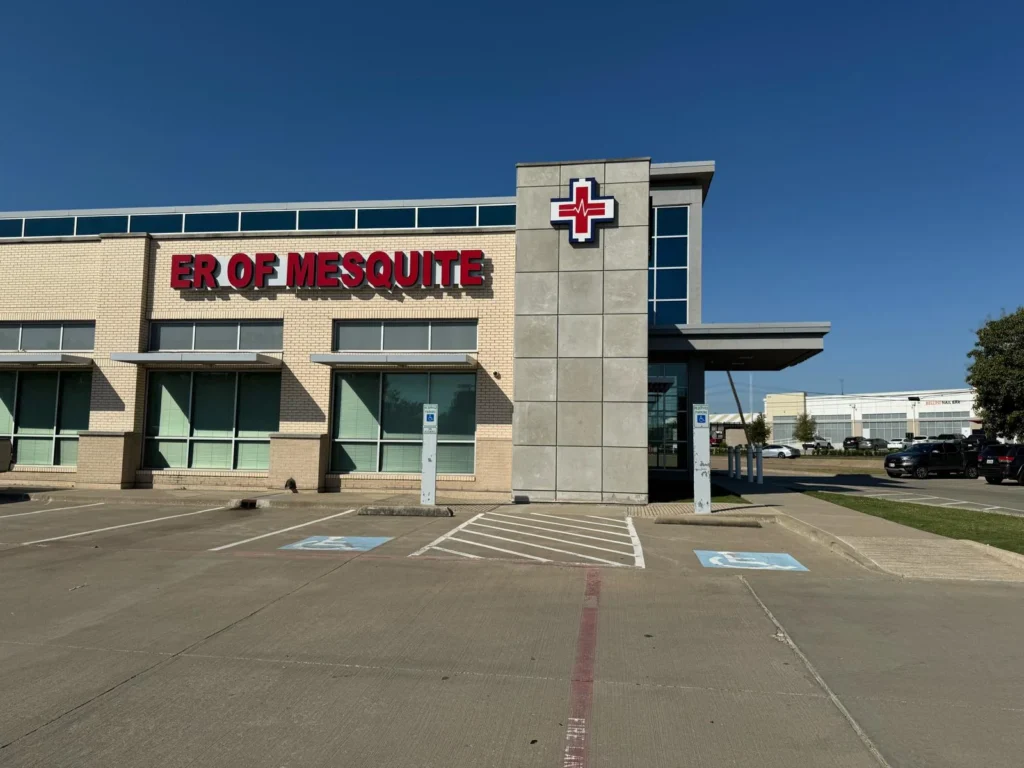
ER for Gallbladder Attack in Mesquite
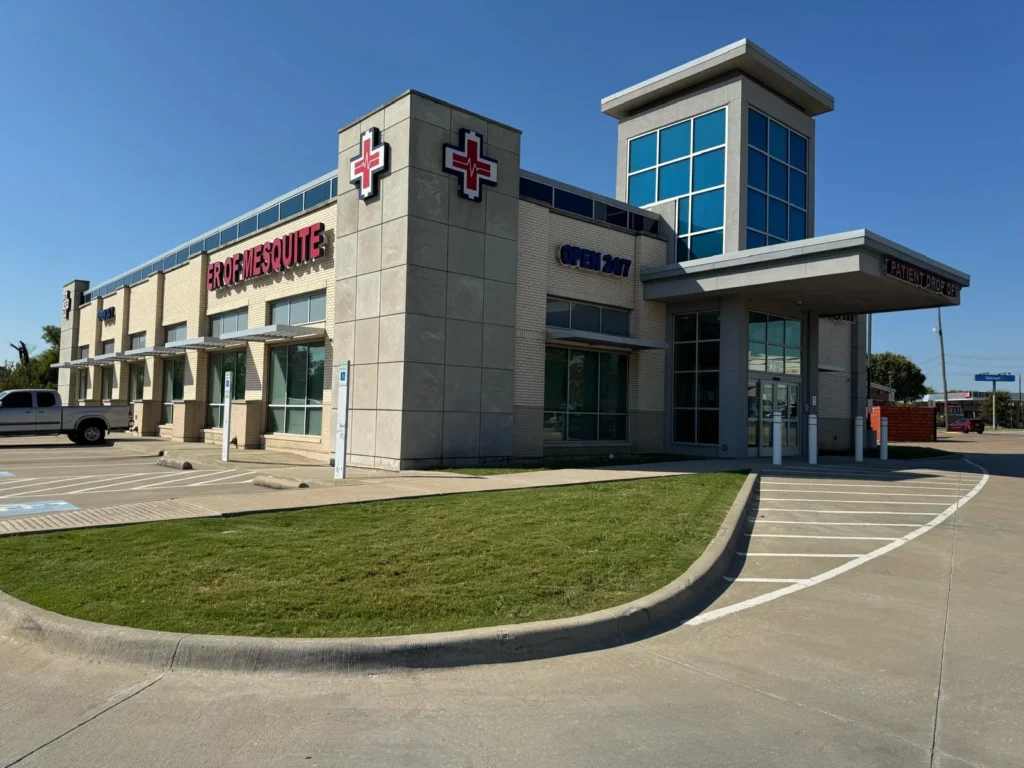
Gallbladder attacks have a way of starting after dinner and peaking after midnight. When you need an ER for gallbladder attack pain at that hour, ER of Mesquite is open on North Belt Line Road near US-80, every night of the year.
We provide gallbladder attack treatment in Mesquite for patients from Rockwall, Heath, Rowlett, Garland, Sunnyvale, Balch Springs, and the surrounding communities. Bring a list of your medications and, if you’ve had an ultrasound before, the name of the facility, so we can compare the images.
Pain Past the Two-Hour Mark? Get It Checked Now
An attack that keeps going is giving you information. The longer it lasts, and the more symptoms gather around it, the more likely the stone has stayed stuck or moved somewhere it shouldn’t. Fever, yellowing, or vomiting that won’t stop only shortens the timeline.
Walk in anytime at 1745 N Belt Line Rd. Gallbladder attack treatment starts with a scan and a set of labs, and you’ll know where you stand before the night is over.
Call Now: (214) 377-8495
Hours: Open 24/7, walk-ins welcome
Walk-In: 1745 N Belt Line Rd, Mesquite, TX 75149

FAQs
Can the ER remove my gallbladder?
Not at a freestanding ER. Gallbladder removal is surgery done in a hospital. What the ER does is confirm whether surgery is needed, control the pain and any infection, and send you to the surgical team with the diagnosis already made. Many patients have surgery days or weeks later, not that night.
Will I need surgery after one gallbladder attack?
Not necessarily right away, but a first gallstone attack is rarely the last once stones are present. Surgeons usually recommend removal after symptoms start, especially with complications. Your ultrasound and lab results from the ER help that conversation start with facts rather than another round of tests.
Can a gallbladder attack feel like a heart attack?
Yes. Both can cause upper abdominal pressure, nausea, sweating, and pain that spreads to the shoulder. That overlap is why adults with heart risk factors get an EKG during the workup. If the pain comes with chest pressure or shortness of breath, call 911.
Why is my gallbladder pain worse at night?
Evening meals tend to be the largest and fattiest of the day, which makes the gallbladder squeeze hard a few hours later. Lying flat can also make the ache harder to ignore. Pain under right rib cage that wakes you and lasts more than a few hours should be checked rather than slept through.
What should I avoid eating after a gallbladder attack?
Fried food, fatty cuts of meat, rich sauces, and large meals are the usual triggers. Smaller, lower-fat meals for the next several days ease the load on the gallbladder. If even light food brings the pain back, that’s a sign the problem hasn’t settled.
Do I need an appointment, and do you take insurance?
You don’t need an appointment. Walk in any hour, including weekends and holidays. We accept most major insurance plans and offer flexible payment plans through Sunbit for the uninsured and self-pay patients. If you’re not sure whether your symptoms need an ER, call (214) 377-8495 and talk it through with our team.