

Cellulitis can progress from a mild patch of red skin to a serious infection of deeper tissue in under 48 hours. Knowing cellulitis when to worry signs is what separates a quick antibiotic course from a hospital admission.
The infection moves through skin and soft tissue, and once it crosses into the lymphatic system or bloodstream, what looked like a manageable rash becomes a medical emergency. Catching cellulitis early changes the outcome.
What Does Cellulitis Look Like?
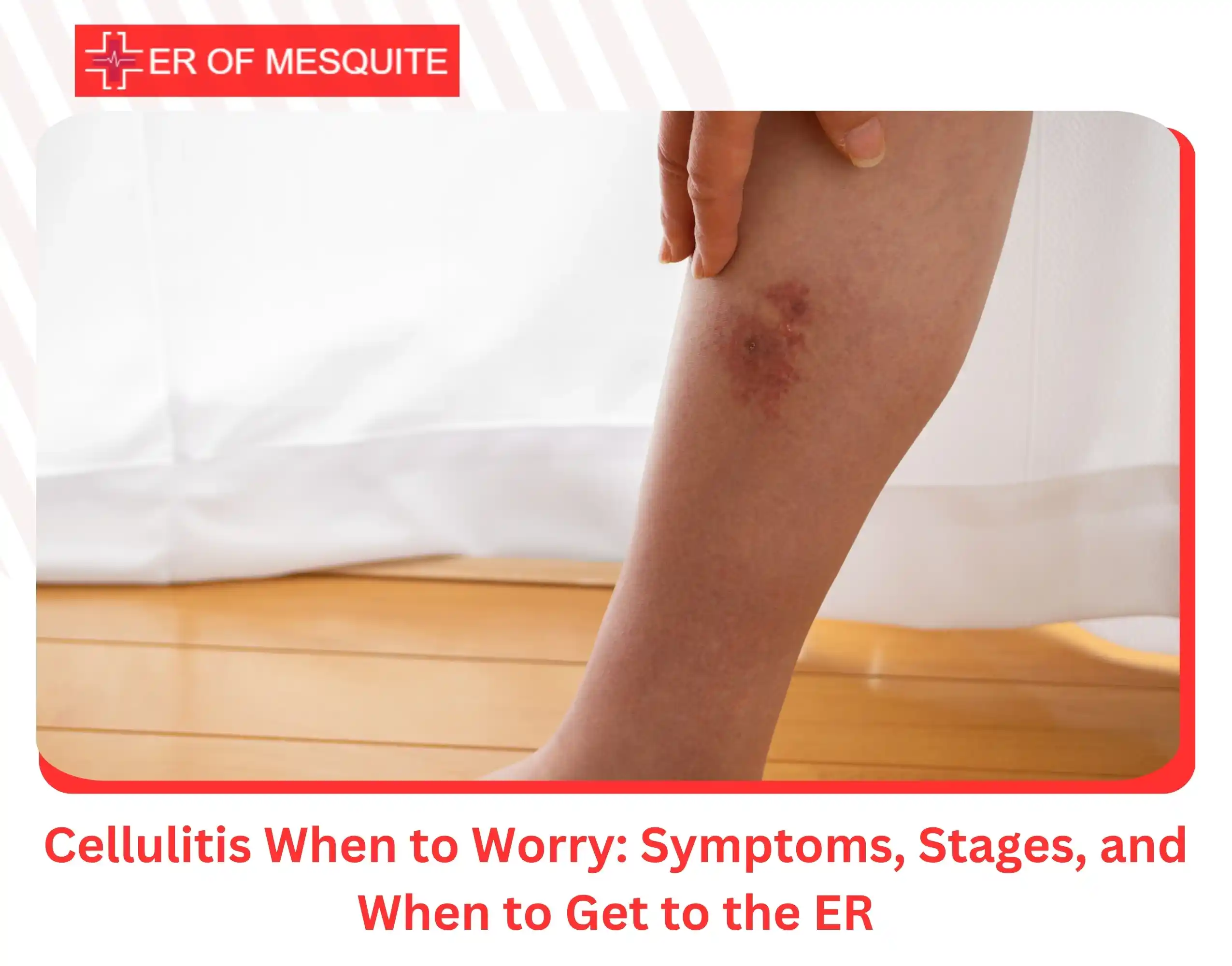
Cellulitis looks like a smooth, shiny patch of red or pink skin that feels warm and tender. The affected area is typically swollen, and the border between healthy skin and infected skin is often poorly defined. It expands outward visibly over hours rather than days, which is one of its most distinguishing features.
Cellulitis most often appears on the lower legs but can develop anywhere bacteria find a way into the skin. Common entry points include cuts, scrapes, insect bites, surgical incisions, or cracks from athlete’s foot.
What does cellulitis look like in practical terms?
- Smooth, stretched, or shiny red skin that feels warm to the touch
- Swelling that may give the area a tight or puffy appearance
- Tenderness or pain when pressed
- An expanding area that grows visibly within hours
- Skin dimpling that resembles an orange peel
- Small blisters or red spots within the affected zone
- Red streaks moving away from the original site, signaling spread through lymph channels
How cellulitis differs from common skin issues?
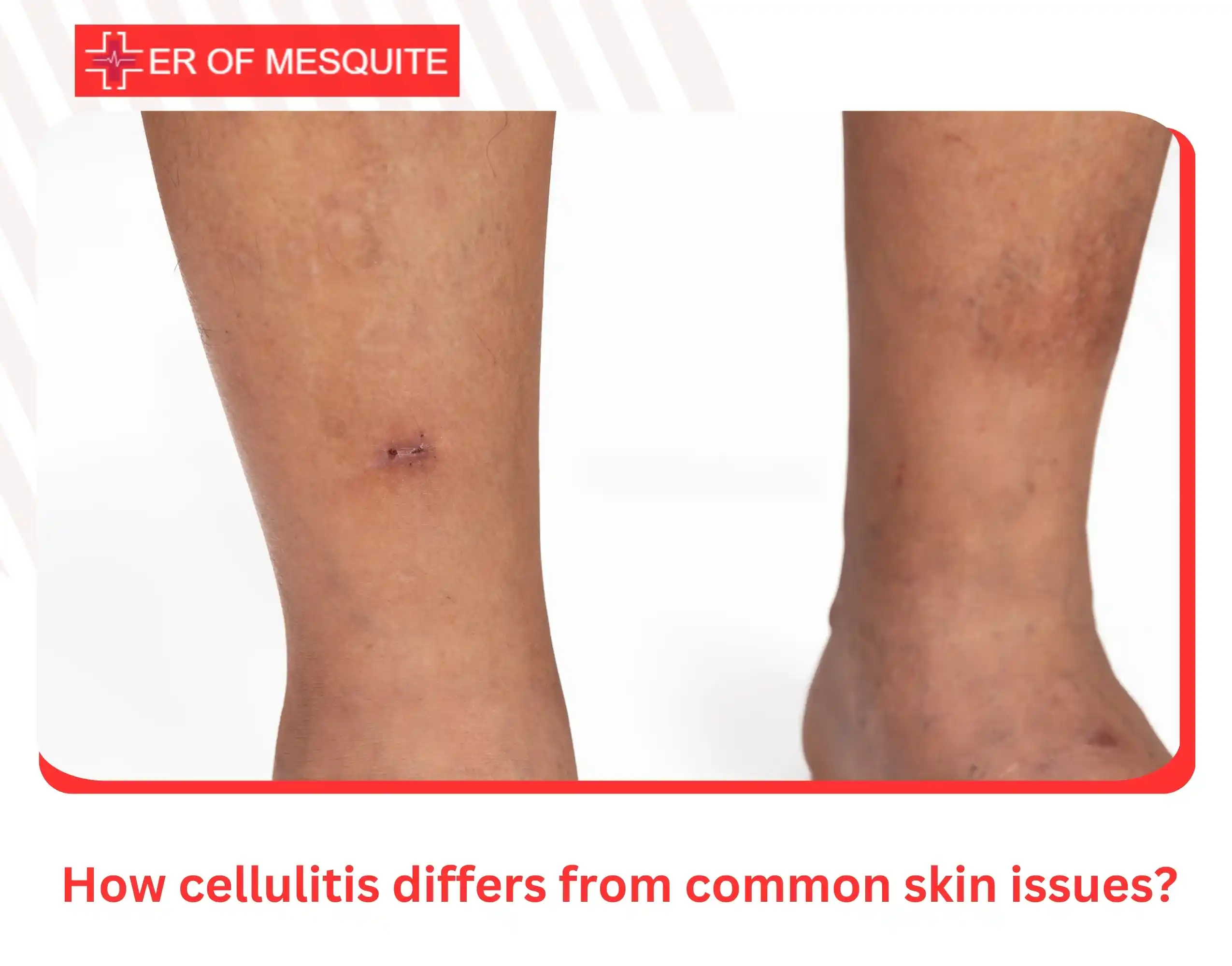
| Condition | How It Differs From Cellulitis |
| Contact dermatitis | Itchy rather than painful, often with bumps or blisters |
| Allergic reaction | Symmetrical, itchy, tied to a specific trigger |
| Fungal infection | Slow-growing, scaly or flaky, often ring-shaped |
| Deep vein thrombosis | Swollen and tender but the skin may feel cool, not warm |
When you ask yourself what does cellulitis look like compared to a less serious skin issue, the answer that matters most is speed. Cellulitis grows visibly. Other rashes generally do not.
What Are the Early Stage Cellulitis Symptoms?
Early stage cellulitis symptoms include mild redness, slight warmth, and tenderness at a single site, often without obvious swelling at first. The skin may feel firmer than usual. These early signs are routinely dismissed as a minor scrape, insect bite, or sunburn reaction, which is precisely why so many cellulitis cases are diagnosed at a more advanced stage than they should be.
Here is how early stage cellulitis symptoms typically progress in the first 48 hours:
- Hours 0-6: A small area of skin becomes pink or pale red and slightly warm. Tenderness is mild. There is no fever.
- Hours 6-24: Redness deepens and visibly expands. Swelling develops. The skin feels noticeably warm compared to surrounding areas. A low-grade fever may begin.
- Hours 24-48: The area can double in size. Pain intensifies. Fever climbs above 100°F. Chills or fatigue may set in. Red streaks may appear if infection is moving through the lymphatic system.
Early stage cellulitis symptoms are the window when oral antibiotics work most reliably. Past the 48-hour mark, particularly once fever has developed, IV antibiotics and closer clinical monitoring usually become necessary.
Cellulitis When to Worry: A Practical Decision Framework
You should worry about cellulitis whenever redness is spreading, fever has developed, or the affected area is on the face, near a joint, or close to the eyes. These factors all signal that home care alone is no longer adequate.
The cellulitis emergency threshold depends on three things: how fast the infection is spreading, where it is located, and what other symptoms accompany it.
Manage at home with primary care follow-up if:
- The red area is small and not expanding
- You have no fever
- Pain is mild and bearable
- You are otherwise healthy with no chronic conditions
Seek urgent care if:
- The red area is visibly expanding over hours
- Pain is moderate and worsening
- You have a low-grade fever
- You have diabetes, lymphedema, or another condition affecting immunity or circulation
Go to the ER immediately if:
- The infection is on the face, near the eye, or affecting the neck
- High fever (above 101°F) has developed
- Red streaks are extending away from the original site
- The skin is becoming hard, blistered, or turning dark or purple
- You have chills, rapid heartbeat, confusion, or difficulty breathing
- You have a weakened immune system from a medical condition
- Pain feels disproportionate to what you can see on the skin
The cellulitis when to worry checklist is not a checklist of certainty. It is a checklist of risk. When in doubt, the safer call is always evaluation.
Is Cellulitis Dangerous?
Yes, cellulitis can become dangerous if untreated. Most cases respond well to antibiotics, but the infection can spread rapidly to deeper tissue, lymph nodes, or the bloodstream. When that happens, the complications are serious.
The dangers of untreated or under-treated cellulitis:
- Lymphangitis: Infection spreading through lymph channels, visible as red streaks extending from the affected area
- Bacteremia: Bacteria entering the bloodstream
- Sepsis: A whole-body inflammatory response that can lead to organ failure
- Necrotizing fasciitis: A rare but rapidly fatal infection of the deep tissue layers
- Endocarditis: Bacterial infection of the heart valves if pathogens reach the heart
- Chronic lymphedema: Permanent swelling after severe or recurrent infection damages the lymphatic system
Whether cellulitis is dangerous in your specific case depends on your immune status, age, chronic conditions, and how quickly you sought treatment. Diabetics, the elderly, and people on immunosuppressive medications face the highest complication rates and benefit the most from early intervention.
What Are Cellulitis Sepsis Symptoms?
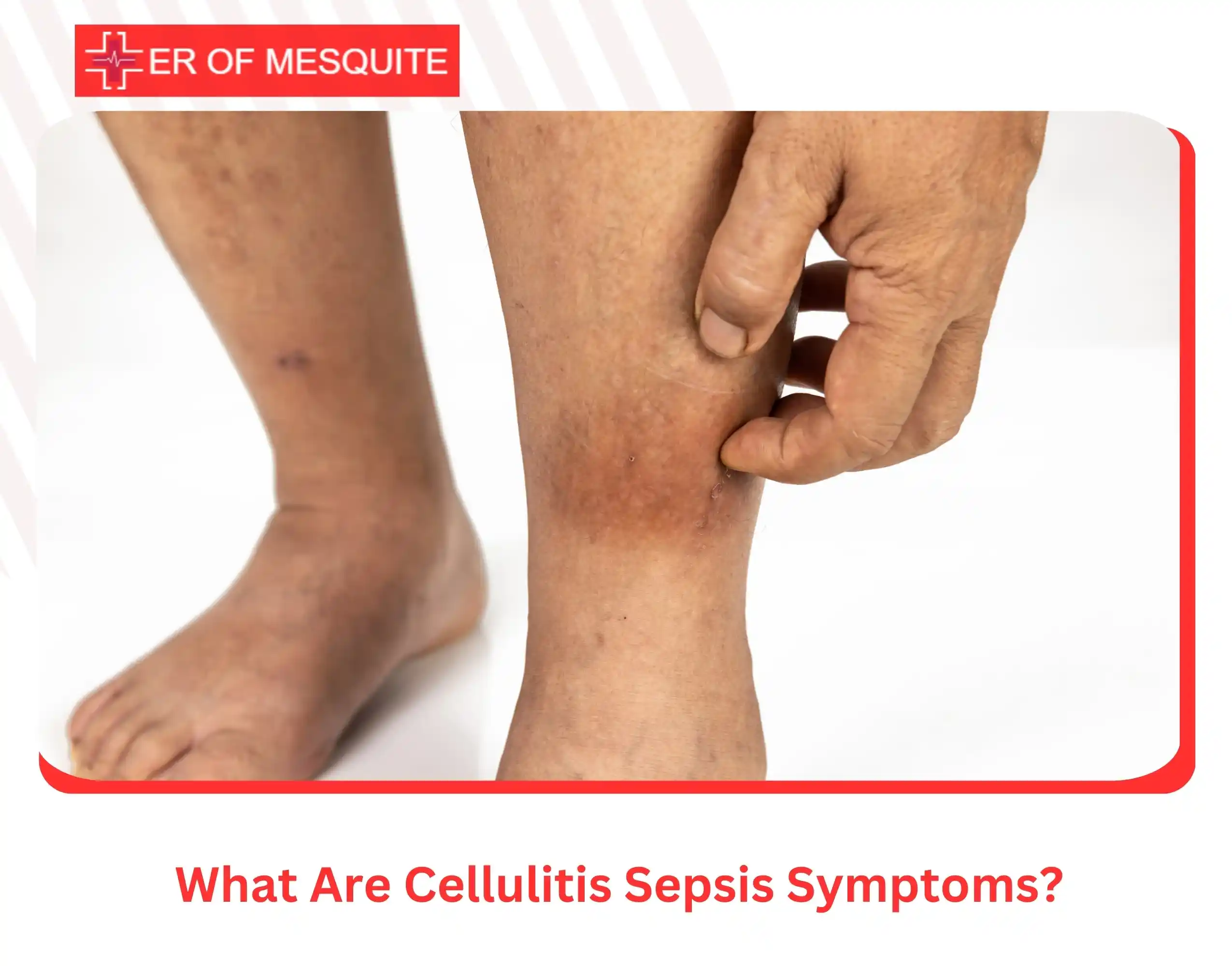
Cellulitis sepsis symptoms include high fever, rapid heart rate, rapid breathing, confusion, low blood pressure, and skin that is cold or mottled away from the infection site. Sepsis means the body’s response to infection has become systemic and is damaging organs.
Watch for:
- Fever above 101°F or, in some cases, unusually low body temperature
- Rapid heart rate
- Breathing rate above 20 breaths per minute
- Confusion, disorientation, or unusual drowsiness
- Sharp drop in urine output
- Cold, pale, or mottled skin in the extremities
- Severe pain spreading beyond just the infection site
Cellulitis sepsis symptoms are a medical emergency. Sepsis advances by the hour, and every hour without antibiotics significantly increases the risk of organ damage and death. If you suspect sepsis is developing, do not wait to see whether symptoms improve. Get to the ER or call 911.
How Can You Prevent Cellulitis?
Cellulitis prevention centers on protecting the skin barrier and treating any break in it promptly. Most cases begin when bacteria enter through a cut, crack, or abrasion that went unnoticed or was not properly cleaned.
- Wash and cover any break in the skin within hours of injury, even small cuts and scrapes
- Keep skin moisturized to prevent the dryness and cracking that creates entry points
- Treat athlete’s foot promptly, since the cracks between toes are a common entry route
- Manage chronic skin conditions like eczema, which thin the skin barrier
- Check feet daily if you have diabetes, looking for cuts, blisters, or early breakdown
- Wear protective footwear in environments where small cuts and abrasions are common
- Keep blood sugar controlled if you have diabetes, since high glucose impairs immune response
If you have had cellulitis once, your risk of recurrence is higher. Pay particular attention to skin care on the previously affected area.
How Is Cellulitis Treated at the ER?
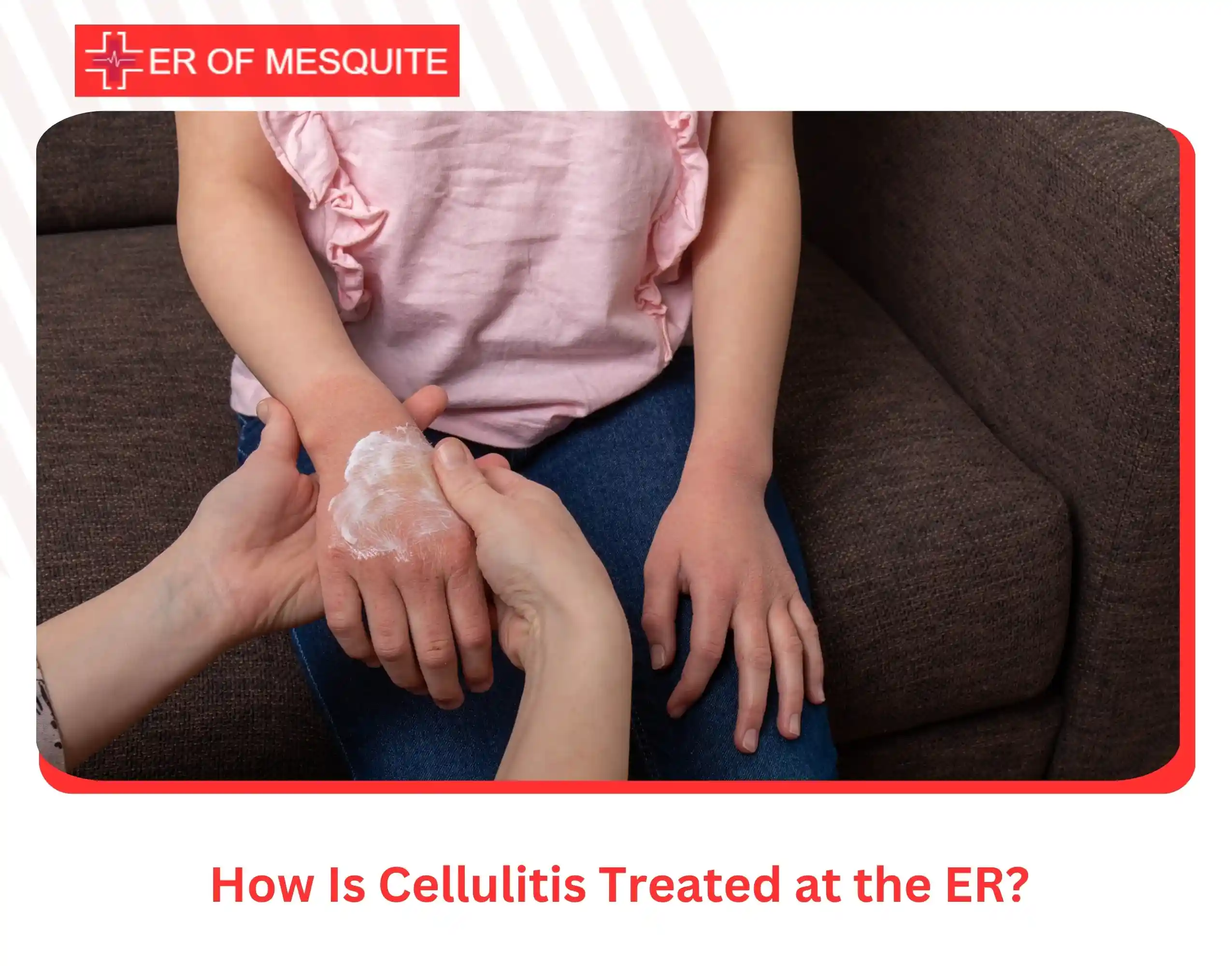
ER care for cellulitis starts with rapid evaluation, lab work to assess infection severity, and antibiotic therapy tailored to the suspected bacterial cause. Mild cases may be discharged on oral antibiotics. Moderate to severe cases require IV antibiotics, often started in the ER and continued either through admission or outpatient infusion.
ER of Mesquite is equipped to manage every severity of cellulitis with on-site diagnostics and immediate intervention. Care includes:
- Wound and skin assessment to determine depth and spread of infection
- Blood work including complete blood count, inflammatory markers, and blood cultures when sepsis is suspected
- IV antibiotic therapy for moderate to severe cases or for patients with underlying risk factors
- Pain management to address the often significant discomfort cellulitis causes
- Imaging when there is concern that the infection has reached deeper tissue or bone
- Sepsis monitoring with continuous vital signs and lab follow-up
Mesquite ER is open 24 hours a day, 7 days a week, with no appointment required. For Mesquite residents dealing with a worsening skin infection, walking in is faster than waiting for a primary care opening.
FAQs
1. What does cellulitis look like in the early stage?
Early cellulitis looks like a small patch of pink or red skin that feels warm and slightly tender. The area is usually firm and may expand visibly within hours, which distinguishes it from a typical rash or insect bite.
2. Is cellulitis dangerous if treated quickly?
Cellulitis is rarely dangerous when treated within 24 to 48 hours of onset. Oral antibiotics resolve most early cases. Untreated cellulitis can progress to sepsis or deeper tissue infection within days, which is when it becomes life-threatening.
3. What cellulitis sepsis symptoms require immediate ER care?
High fever, rapid heart rate, confusion, rapid breathing, low blood pressure, and cold or mottled skin away from the infection are cellulitis sepsis symptoms requiring immediate ER care. Sepsis advances by the hour.
4. Cellulitis when to worry about it spreading?
Worry whenever you see red streaks extending from the original site, the red area is doubling in size over hours, or fever has developed. These signal the infection is moving through the lymphatic system or bloodstream.
5. Can early stage cellulitis symptoms be treated at home?
Early stage cellulitis symptoms in healthy adults can sometimes be treated with a same-day oral antibiotic prescription from a doctor. Home care alone is not sufficient. Antibiotic treatment is always required to clear cellulitis.