


Medically reviewed by the ER of Mesquite emergency care team
| 🚨 Trouble Breathing? Call 911. If an adult with RSV symptoms has severe shortness of breath, chest pain, blue or gray lips, confusion, or cannot speak in full sentences, call 911 or come immediately to ER of Mesquite. Open 24/7 at 1745 N Belt Line Rd, Mesquite, TX 75149. |
Most people think of RSV as a baby’s illness. It isn’t. The CDC estimates that respiratory syncytial virus sends tens of thousands of adults to the hospital in the United States every year, and a meaningful share of those are seniors and people with chronic lung or heart disease.
The symptoms of rsv in adults often start looking like a cold and then progress to something that affects the lungs more seriously. Knowing what to watch for and when to seek emergency care can make the difference between a rough week at home and a dangerous hospitalization.
RSV in adults: the quick overview
RSV in adults usually starts like a cold with runny nose, cough, and mild fever, then peaks around day 3 to 5. For young, healthy adults it is often mild. For older adults, those with COPD, asthma, heart disease, or weakened immune systems, RSV can escalate into pneumonia, worsening lung disease, or respiratory failure that requires hospital care.
What are the symptoms of RSV in adults?
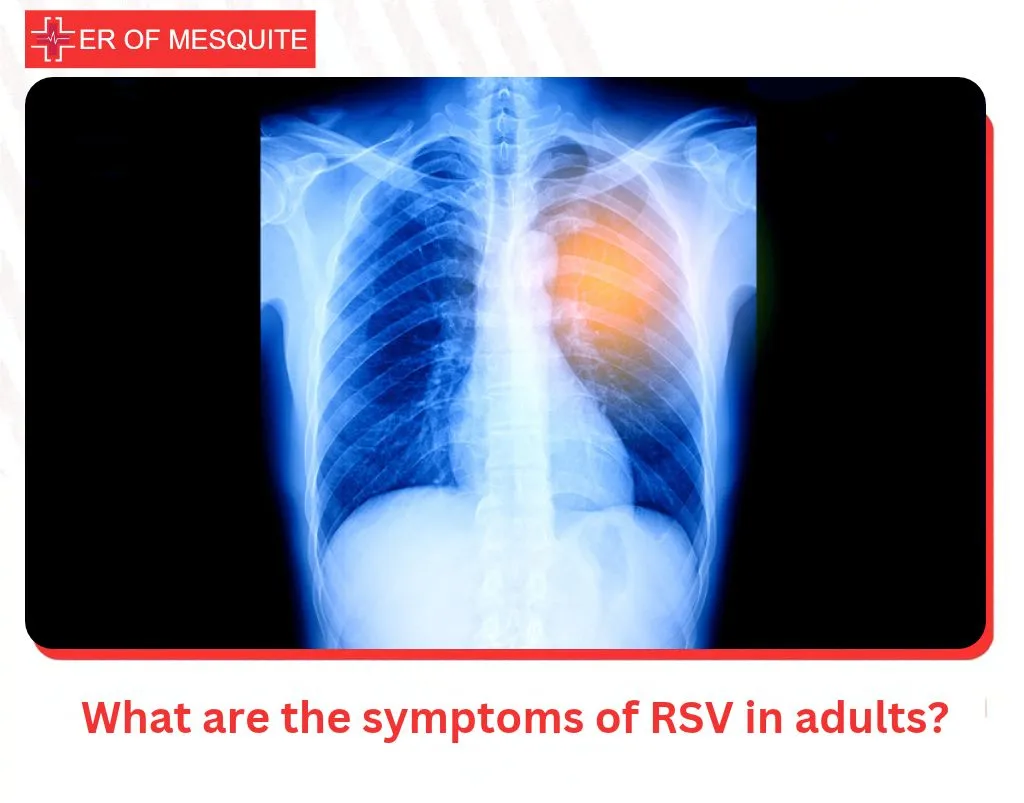
Adults with RSV usually feel sick in a pattern that resembles a bad cold or mild flu. The CDC’s overview of RSV in adults describes the common signs: ¹
- Runny or congested nose
- Cough, sometimes with wheezing
- Low-grade fever
- Sore throat
- Mild headache
- Fatigue or feeling run down
- Shortness of breath, especially in older adults or those with lung disease
- Decreased appetite
Symptoms typically appear 4 to 6 days after exposure. Mild cases improve within 1 to 2 weeks. Red flags appear when cough worsens, breathing becomes labored, or chest pain develops.
RSV vs. cold vs. flu in adults: a comparison
RSV shares symptoms with other seasonal illnesses, which is why it is often missed. This side-by-side comparison highlights the differences adults can use to recognize what they may have.
| Feature | Common Cold | RSV | Flu |
|---|---|---|---|
| Onset | Gradual | Gradual, 1 to 3 days | Sudden, within hours |
| Fever | Rare or low-grade | Low-grade, sometimes higher | High, often above 101F |
| Body aches | Mild if any | Mild to moderate | Severe, widespread |
| Cough | Mild, dry | Prominent, may wheeze | Dry, can be persistent |
| Runny nose | Very common | Very common | Sometimes |
| Shortness of breath | Rare | Possible, risk increases with age | Possible in severe cases |
| Duration | 7 to 10 days | 1 to 2 weeks | 1 to 2 weeks, fatigue longer |
Testing is the only way to know for sure. If your symptoms match the RSV pattern and you fall into a high-risk group, early evaluation matters.
Who is at highest risk for severe RSV?
Most healthy adults recover from RSV at home. Certain groups face dramatically higher risk of serious illness, hospitalization, or complications:
- Adults age 60 and older. Immune response weakens with age, and airways are less resilient.
- COPD, asthma, or chronic lung disease. Any respiratory virus can tip an already compromised airway into crisis.
- Heart failure or coronary artery disease. Respiratory stress strains the heart and can trigger cardiac events.
- Diabetes. Impaired immune response makes infections harder to clear.
- Immunocompromised adults. Cancer treatment, organ transplant, autoimmune therapies, and HIV all raise RSV risk.
- Residents of long-term care facilities. Close living quarters accelerate viral spread.
- Adults recovering from recent surgery or illness. Reduced reserve makes RSV harder to fight off.
The physical stress of a serious respiratory infection can also push blood pressure dangerously high. Our guide to hypertensive crisis symptoms explains when BP becomes an emergency on its own.
Mild, moderate, and severe RSV: the severity ladder
RSV in adults runs along a spectrum. Knowing which tier you fall into shapes what to do next.
Mild RSV
Runny nose, mild cough, low-grade fever, fatigue. Breathing feels normal. You can carry out most daily activities with extra rest. Home care with fluids, rest, and symptom relief is usually enough.
Moderate RSV
Persistent cough with occasional wheezing, shortness of breath with activity, mild chest tightness. Fever may run higher. Sleep is disrupted by coughing. A medical evaluation is warranted, especially in high-risk groups.
Severe RSV
Shortness of breath at rest, chest pain, confusion, bluish tinge to lips or fingertips, inability to speak in full sentences. This is an emergency. Head to the ER immediately.
Complications: when RSV turns serious
Serious complications of rsv in adults are the reason this virus deserves attention. The NIH NIAID resource on respiratory syncytial virus lists these as the main concerns for adult patients: ²
- Pneumonia. RSV can inflame the deeper airways and lead to viral pneumonia, which may become bacterial too.
- COPD or asthma exacerbation. Underlying lung disease can flare sharply, sometimes requiring hospitalization.
- Heart failure worsening. Low oxygen and inflammation strain the heart; existing heart failure can decompensate.
- Respiratory failure. Lungs may no longer keep oxygen levels high enough, requiring oxygen support or ventilator care.
- Secondary bacterial infection. Weakened airways open the door to bacterial lung infections after the viral illness.
If RSV triggers new shortness of breath causes that worsen hour by hour, or if you develop chest pain warning signs, do not wait. Emergency evaluation separates safe recovery from dangerous decompensation.
When RSV symptoms escalate past what home care can handle, do not wait it out alone. The team at ER of Mesquite evaluates adult respiratory illness with on-site oxygen monitoring, chest imaging, and lab work, often within an hour of arrival.
When to go to the ER for RSV
Head to the ER if any of the following develop. Even one is reason enough:
- Shortness of breath at rest or that is getting worse
- Chest pain or pressure
- Blue, gray, or dusky color on lips, fingertips, or face
- Inability to speak in full sentences without pausing for breath
- Confusion or sudden disorientation, especially in older adults
- High fever that does not come down with home measures
- Symptoms suddenly worsening after seeming to improve
- Severe dehydration (dry mouth, dizziness, no urination for 8+ hours)
- Coughing up blood
- Any new symptoms in someone with heart or lung disease
What happens at ER of Mesquite for adult RSV
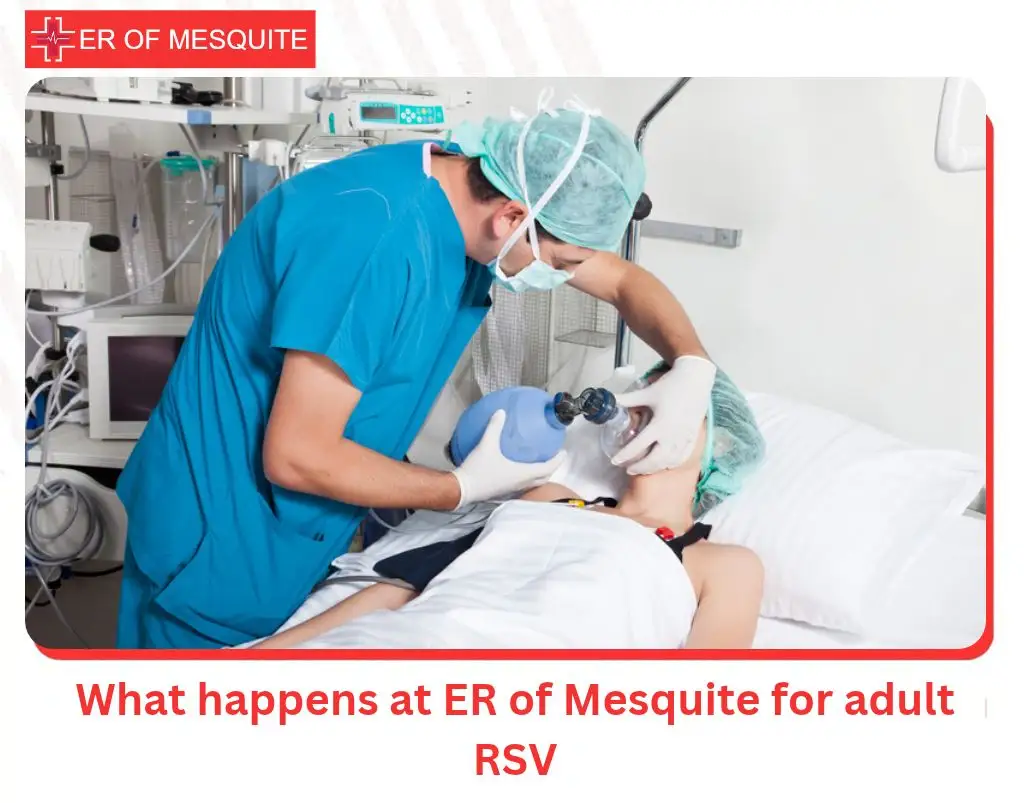
A walk-in cardiovascular emergency evaluation for suspected RSV complications moves fast. Board-certified emergency physicians see you within minutes and use on-site diagnostics to find the cause.
A typical visit includes:
- Oxygen saturation monitoring
- Chest X-ray to check for pneumonia or fluid
- Respiratory virus testing (RSV, flu, COVID panel)
- Blood work for infection markers, cardiac strain, and organ function
- EKG when chest symptoms are present
- Respiratory support with oxygen or nebulized treatment when needed
- IV fluids for dehydration
- Observation and reassessment before discharge or hospital transfer
Most adults with RSV complications are stabilized quickly and leave with clear next steps, whether that means home recovery with monitoring or admission for ongoing care.
Why RSV surges in winter months
RSV follows a seasonal pattern, peaking in the fall and winter in most of the United States. Cooler, drier air makes the virus more stable outside the body, and more time spent indoors creates more opportunities for spread.
During RSV season, the risk rises sharply in group settings like family gatherings, schools, and long-term care homes. Hand washing, avoiding close contact with sick people, and staying home when symptomatic all reduce spread. For adults 60 and older, vaccination is now available and worth discussing with a primary care provider.
People ask about RSV in adults
Is RSV contagious for adults?
Yes. RSV spreads through respiratory droplets, direct contact, and contaminated surfaces. Adults can spread the virus for 3 to 8 days, sometimes longer in those with weakened immune systems. Hand washing and avoiding sick contacts reduce transmission.
How long does RSV last in adults?
Most cases of RSV in adults last 1 to 2 weeks. Cough and fatigue may linger 2 to 3 weeks. Severe cases with pneumonia or lung complications can extend recovery much longer, especially in older adults or those with chronic illness.
Can adults get RSV more than once?
Yes. Immunity after RSV infection is incomplete and short-lived. Adults can catch RSV multiple times across a lifetime, often each winter season. Severity varies from one infection to the next based on health status.
What’s the difference between RSV and bronchitis?
RSV is a specific virus; bronchitis is inflammation of the airways that can be caused by RSV or many other viruses or irritants. RSV can trigger bronchitis as part of the illness, which is why symptoms can overlap.
Can RSV cause long-term lung damage in adults?
Severe RSV can leave adults with weeks of persistent cough and reduced exercise tolerance. In older adults and those with lung disease, a serious RSV episode can worsen underlying chronic conditions for months afterward.
If RSV symptoms worsen, come to ER of Mesquite
RSV in adults usually passes with rest and fluids. When it doesn’t, the signs that it is getting worse are often clear: breathing becomes harder, the cough deepens, confusion creeps in. At that point, waiting is the wrong choice.
Walk into ER of Mesquite for same-visit oxygen monitoring, chest imaging, respiratory testing, and expert evaluation. Open 24 hours a day, seven days a week. No appointment needed. Questions? Get in touch with our team.
External References Links :
1.CDC’s overview of RSV in adults
2.NIH NIAID resource on respiratory syncytial virus
ER of Mesquite | Open 24/7
1745 N Belt Line Rd, Mesquite, TX 75149 | (214) 377-8495
No appointment. No referral needed.