


Chest pain is one of the most frightening symptoms anyone can experience — and one of the most common reasons adults visit an emergency room. Every year, more than 8 million Americans go to the ER with chest pain, and a delay of even 30 minutes during a heart attack can mean the difference between full recovery and lasting damage. The challenge: not all chest pain is cardiac, but you can’t always tell from the outside.
This guide from ER of Mesquite helps you recognize what your symptoms might mean, when to call 911 versus drive to the ER, and what to expect when you arrive. Our 24/7 freestanding emergency room in Mesquite, TX is staffed by board-certified physicians with hospital-grade cardiac diagnostic tools — ready the moment you walk in.
1. Why Chest Pain Should Never Be Ignored
Heart disease is the number one cause of death in the United States, claiming a life every 33 seconds. Yet many people who experience chest pain wait too long to get help — sometimes hoping it will pass, sometimes fearing the cost or embarrassment of “making a fuss.” That hesitation costs lives.
The “Golden Hour” — Why Every Minute Matters
During a heart attack, blood flow to part of the heart muscle is blocked. Each minute without treatment, more heart cells die. Patients who receive emergency cardiac care within the first 60 to 90 minutes of symptoms have dramatically better survival and recovery outcomes than those who delay.
Even Non-Cardiac Chest Pain Deserves a Professional Check
Chest pain that turns out to be heartburn or muscle strain is a relief — but only a doctor can confirm that. Conditions like pulmonary embolism, aortic dissection, and pneumothorax can be just as life-threatening as a heart attack and need imaging and lab work to identify.
2. Common Causes of Chest Pain
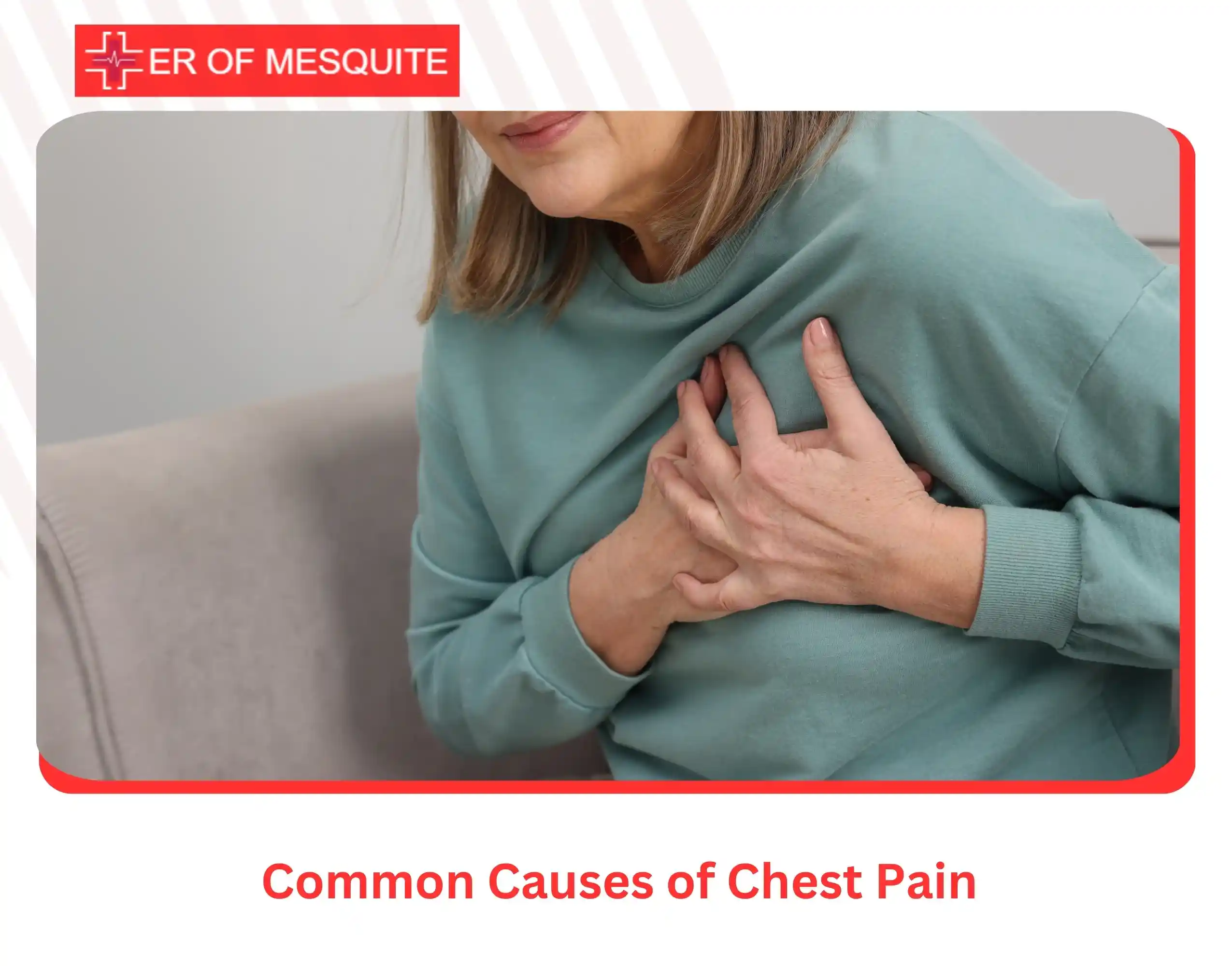
Chest pain has dozens of possible causes. Understanding the major categories helps you describe your symptoms accurately when you arrive at the ER.
Cardiac Causes
- Heart attack (myocardial infarction) — a blocked coronary artery cuts blood flow to the heart muscle.
- Angina — chest pain from reduced blood flow, often triggered by exertion or stress.
- Pericarditis — inflammation of the sac around the heart, often sharp and worse when lying down.
- Aortic dissection — a tear in the body’s main artery; sudden, severe, tearing pain that radiates to the back.
Pulmonary (Lung) Causes
- Pulmonary embolism — a blood clot in the lungs; sudden chest pain with shortness of breath.
- Pneumonia — infection causing chest pain that worsens with deep breathing or coughing.
- Pneumothorax — a collapsed lung; sharp, one-sided chest pain with breathing difficulty.
Digestive Causes
- GERD (acid reflux) — burning pain behind the breastbone, often after eating.
- Esophageal spasm — intense, gripping pain that mimics a heart attack.
- Gallbladder disease — pain in the upper right or center chest, often after fatty meals.
Musculoskeletal Causes
- Costochondritis — inflammation where ribs meet the breastbone; tender to the touch.
- Muscle strain — from heavy lifting, intense exercise, or coughing fits.
Anxiety & Panic-Related Chest Pain
Panic attacks can cause real chest pain, racing heart, and shortness of breath. Even if you have a history of anxiety, never assume new chest pain is panic-related until a heart attack has been ruled out by an EKG and lab work.
Cardiac vs. Non-Cardiac Chest Pain — A Quick Comparison
| Feature | Cardiac Chest Pain | Non-Cardiac Chest Pain |
| Pain Quality | Pressure, squeezing, heaviness | Sharp, stabbing, or burning |
| Location | Center or left side, may radiate to arm, jaw, back | Often pinpoint or one specific spot |
| Duration | Lasts more than a few minutes | Brief seconds, or hours of dull ache |
| Triggers | Exertion, stress, cold weather | Eating, deep breath, body movement |
| Other Symptoms | Sweating, nausea, shortness of breath | Heartburn, tenderness when pressed |
| Action | Call 911 or go to ER immediately | Visit ER same day to confirm |
3. Heart Attack Warning Signs You Must Know
Heart attacks don’t always look like what you see in movies. Knowing the full range of symptoms — including the ones that get missed — can save your life or someone else’s.
Classic Heart Attack Symptoms
- Pressure, squeezing, fullness, or pain in the center of the chest
- Pain that lasts more than a few minutes or comes and goes
- Pain radiating to the shoulders, neck, jaw, arms, or back
- Cold sweat, nausea, or lightheadedness
- Shortness of breath, with or without chest discomfort
Heart Attack Symptoms in Women — Often Missed
Women are more likely to die from a heart attack than men, partly because their symptoms are frequently dismissed or misattributed to anxiety or indigestion. Women may experience:
- Unusual fatigue lasting days before the event
- Pain in the jaw, neck, or upper back rather than the chest
- Indigestion, nausea, or vomiting
- Shortness of breath without chest pain
- Lightheadedness or sudden cold sweats
Silent Heart Attacks — When There’s No Chest Pain
Up to 1 in 5 heart attacks are “silent” — the damage happens but the person doesn’t realize it. Common in people with diabetes and older adults, silent heart attacks may show up as fatigue, mild discomfort dismissed as indigestion, or a flu-like feeling.
Symptoms in Older Adults & People with Diabetes
Diabetes can damage the nerves that signal cardiac pain, so heart attacks may present with confusion, sudden weakness, fainting, or just “not feeling right.” If you or a loved one has diabetes and feels something is wrong, take it seriously.
| ⚠️ Experiencing chest pain right now? If symptoms are severe — pressure lasting more than 5 minutes, pain spreading to your arm or jaw, sweating, or shortness of breath — call 911 immediately. For non-emergency chest pain, walk in 24/7 to ER of Mesquite at 1745 N Belt Line Rd or call (214) 377-8495. |
4. When to Call 911 vs. Go to the ER
Knowing the right level of care for your symptoms saves time and may save your life. Here’s a quick reference to help you decide.
| Call 911 Immediately | Go to ER Now | Same-Day Care OK |
| Crushing chest pressure lasting >5 minutes | Chest pain that comes and goes during exertion | Mild chest tightness with known acid reflux |
| Pain spreading to jaw, arm, or back | New chest pain at rest, no severe symptoms | Soreness after physical activity or coughing |
| Difficulty breathing or fainting | Chest pain plus mild shortness of breath | Brief, sharp pain that quickly resolves |
| Cold sweat, gray skin, confusion | Chest pain with anxiety, no cardiac history | Pain only when pressing on chest wall |
When in doubt, choose the higher level of care. Paramedics can begin lifesaving treatment in the ambulance — including EKG transmission to the ER, oxygen, aspirin, and IV access. If you’re unsure, call 911.
5. What NOT to Do During a Chest Pain Episode
Common mistakes during a chest pain emergency can turn a survivable event into a fatal one. Avoid these:
Don’t Wait It Out
“I’ll see if it goes away” is the most dangerous response to chest pain. By the time you realize it isn’t going away, irreversible heart muscle damage may have already occurred.
Don’t Drive Yourself if Symptoms Are Severe
If you’re having a heart attack, you can lose consciousness behind the wheel and crash — endangering yourself and others. Call 911. If symptoms are mild and stable, have someone else drive you to the ER.
Don’t Skip Aspirin (If Recommended)
If a 911 dispatcher or doctor advises it and you’re not allergic and not on blood thinners, chewing one regular (325 mg) or four baby (81 mg) aspirin can help prevent clot growth during a suspected heart attack. Chew, don’t swallow whole — it absorbs faster.
Don’t Dismiss Symptoms Because You’re “Too Young” or “Too Healthy”
Heart attacks in adults under 40 are rising — driven by stress, diet, sedentary lifestyles, and undiagnosed conditions. Marathon runners and gym regulars have heart attacks too. Fitness doesn’t grant immunity.
6. Chest Pain Treatment at ER of Mesquite
From the second you arrive at ER of Mesquite, chest pain triggers our highest-priority protocol. There’s no waiting room delay — you’re seen immediately by a board-certified emergency physician.
Our 24/7 Cardiac Emergency Protocol
Within minutes of arrival, our team begins parallel evaluation: vital signs, EKG, IV access, lab draws, and a focused cardiac history. Time is muscle — and our workflow reflects that.
Diagnostic Tools — Hospital-Grade, On-Site
- EKG / ECG — a 12-lead electrocardiogram identifies most heart attacks within seconds. Learn about our EKG services.
- Cardiac enzyme test — measures troponin and other proteins released when heart muscle is damaged. See our cardiac enzyme testing.
- CT scan — rules out aortic dissection, pulmonary embolism, and other dangerous causes. Read about our CT scan services.
- Digital X-ray — identifies pneumonia, pneumothorax, and structural issues. View our digital X-ray services.
- Full on-site lab — complete blood count, metabolic panel, D-dimer, and inflammatory markers — results within minutes, not hours.
Fast Treatment Pathways
Once we identify the cause, treatment begins immediately:
- Suspected heart attack — oxygen, aspirin, nitroglycerin, IV access, and rapid transfer arrangements to a partner cath lab when needed.
- Pulmonary embolism — anticoagulation and stabilization.
- Pneumonia or infection — IV antibiotics, fluids, and respiratory support.
- GERD or musculoskeletal — targeted relief and a follow-up plan.
Learn more about our heart attack treatment services.
What to Expect From Walk-In to Discharge
As a freestanding emergency room, we offer the same care as a hospital ER without the long waits. Expect rapid triage, immediate physician evaluation, comprehensive testing, clear explanation of findings, and a treatment or transfer plan tailored to your condition.
7. Risk Factors & Prevention
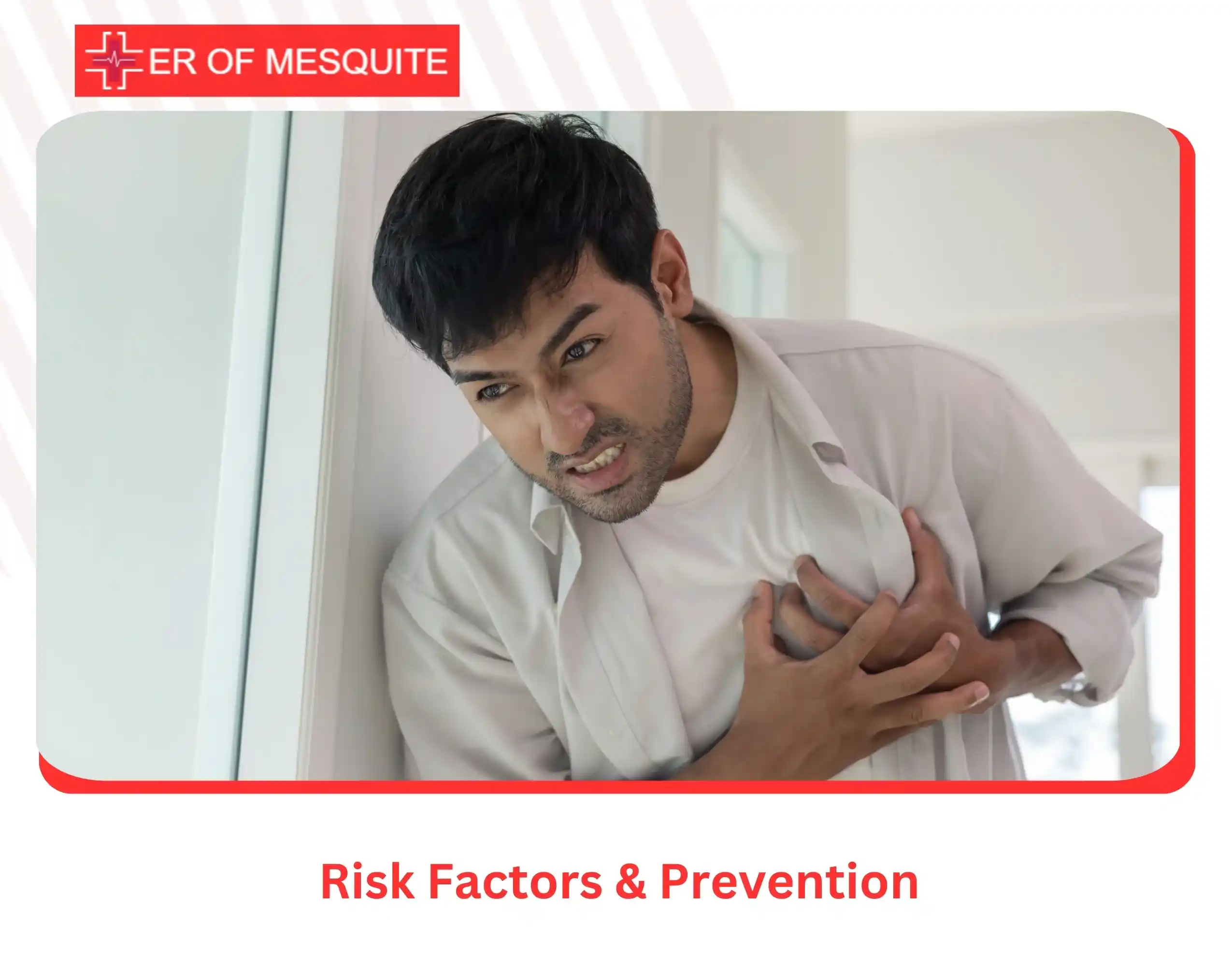
Reducing your risk of chest pain emergencies starts with understanding your personal risk profile.
Modifiable Risk Factors — What You Can Control
- High blood pressure — the silent killer; check yours regularly.
- High cholesterol — LDL above 130 mg/dL increases risk.
- Smoking — doubles the risk of heart attack; quitting cuts risk dramatically within a year.
- Excess weight & sedentary lifestyle — even modest weight loss helps.
- Diabetes — controlling blood sugar protects your heart and arteries.
- Chronic stress — elevated cortisol contributes to heart disease.
- Excessive alcohol use — more than 1–2 drinks per day raises risk.
Non-Modifiable Risk Factors — Know Your Baseline
- Age — risk rises after 45 for men and 55 for women.
- Family history — a parent or sibling with early heart disease raises your risk.
- Gender — men have higher risk earlier; women’s risk rises after menopause.
- Ethnicity — some groups have higher rates of hypertension and diabetes.
When to Schedule a Cardiac Screening
If you have multiple risk factors, a family history, or symptoms like exertional chest pain or shortness of breath, talk to your primary care doctor about a cardiac stress test, lipid panel, or coronary calcium scan. ER of Mesquite can stabilize emergencies and connect you to the right follow-up resources.
8. Don’t Risk It — Visit ER of Mesquite for Chest Pain Care

Chest pain is one symptom that should never be dismissed, downplayed, or delayed. At ER of Mesquite, a board-certified emergency physician is on duty 24 hours a day with hospital-grade cardiac diagnostics ready to deliver answers and treatment within minutes. Whether your chest pain turns out to be cardiac or something less serious, you deserve to know — and you deserve fast, compassionate care while you find out.
| 📍 ER of Mesquite — 24/7 Emergency Care Address: 1745 N Belt Line Rd, Mesquite, TX 75149 Phone: (214) 377-8495 Hours: Open 24 hours a day, 7 days a week, 365 days a year Walk-Ins Welcome: No appointment needed Insurance: All major commercial insurance accepted If symptoms are severe: Call 911 first. Otherwise, walk in or call (214) 377-8495. |
Frequently Asked Questions About Chest Pain
How do I know if my chest pain is a heart attack or anxiety?
You often can’t tell from symptoms alone — heart attack and panic attack share many features (chest tightness, racing heart, shortness of breath, sweating). The only way to know for sure is an EKG and cardiac enzyme test. If you’re unsure, treat it as a heart attack until proven otherwise.
Can chest pain go away on its own?
Some causes (heartburn, muscle strain, anxiety) do resolve on their own. But heart attack pain can also fade temporarily before returning worse. Never assume disappearing chest pain means you’re in the clear — get evaluated to be safe.
Is chest pain on the left side always a heart attack?
No. The heart sits slightly left of center, but left-sided chest pain has many causes — muscle strain, costochondritis, lung issues, even gas. That said, classic heart attack pain often does feel like left-sided pressure. Always evaluate left-sided chest pain professionally if it’s new or severe.
Should I take aspirin if I think I’m having a heart attack?
If you’re not allergic and not on blood thinners, chewing one regular aspirin (325 mg) or four baby aspirin (81 mg each) can help during a suspected heart attack. Chew, don’t swallow — it absorbs faster. Always follow 911 dispatcher instructions and never delay calling for help to find aspirin.
Can young adults have heart attacks?
Yes — and rates are rising. Heart attacks in adults under 40 have increased over the past decade due to stress, diet, sedentary lifestyles, vaping, recreational drug use, and undiagnosed genetic conditions. Don’t dismiss chest pain just because of your age.
Will my insurance cover an ER visit for chest pain?
Most commercial insurance plans cover emergency cardiac evaluation, including chest pain workups. ER of Mesquite accepts all major commercial insurance plans. Visit our insurance coverage page or learn about our no surprise billing policy for full details. We also offer flexible payment plans for uninsured patients.
How fast can I be seen at ER of Mesquite for chest pain?
Chest pain is our highest-priority complaint. You’ll be evaluated within minutes of walking in — typically with an EKG performed in the first 5–10 minutes. We’re a freestanding ER with no triage backups and no overcrowded waiting rooms.