


Rotavirus in infants was once almost unavoidable, infecting nearly every child before age five. A vaccine changed that, cutting rotavirus hospitalizations by roughly 80 percent according to Texas Children’s.
Even so, rotavirus in infants still circulates, and for an unvaccinated or partially protected baby it brings days of watery diarrhea and vomiting. The real danger is how fast that fluid loss turns into dehydration.
This guide covers the symptoms, the vaccine, and the point where a baby needs the ER.
What Are the Symptoms of Rotavirus Infants?
Rotavirus in infants usually starts with a fever and vomiting, then frequent, watery diarrhea within a day or two. Symptoms appear about two to three days after exposure and tend to run more severe than an ordinary stomach bug, especially in babies under three years old.
Watch for this pattern:
- Fever, often the first sign
- Vomiting that arrives before the diarrhea
- Frequent, watery infant diarrhea, sometimes pale or greenish
- Fussiness and visible belly discomfort
- Less interest in the bottle or breast
- Early dehydration signs as fluid loss adds up
Rotavirus symptoms in babies can be hard to read, since an infant cannot describe the cramping or nausea. The watery infant diarrhea and a drop in wet diapers usually tell the story first. One detail matters for later: blood or mucus in the stool is not typical of rotavirus, so it points to a different problem and is worth a prompt look from a clinician.
How Long Does Rotavirus Last in Infants?

Rotavirus in infants typically lasts three to eight days, longer than most stomach viruses. It often opens with fever and vomiting, followed by watery diarrhea that can persist for the better part of a week while the gut heals.
| Stage | Timing | What is happening |
| Exposure to onset | 2 to 3 days | Virus multiplies; no symptoms yet |
| Fever and vomiting | First 1 to 2 days | Often the earliest signs; appetite drops |
| Watery diarrhea | Up to 8 days | The longest and most dehydrating phase |
| Recovery | As symptoms ease | Energy and feeding slowly return |
| Still shedding | During and a few days after | Contagious, so hygiene still matters |
If diarrhea stretches past a week, or fluids will not stay down, the illness has moved beyond the routine range and a baby should be seen.
Can a Vaccinated Baby Still Get Rotavirus?
A vaccinated baby can still get rotavirus, but the illness is usually far milder and much less likely to send a child to the hospital. The vaccine prevents most severe cases or makes symptoms lighter rather than blocking infection outright, which is why a protected baby may have only a brief, mild bout.
The rotavirus vaccine is given as oral drops, not a shot. Babies receive two or three doses depending on the brand, with the first dose before 15 weeks and the last by 8 months of age, on the standard schedule alongside other infant immunizations at 2, 4, and sometimes 6 months. That early window is why pediatricians start the series so young. If you are unsure whether your baby is up to date, your pediatrician keeps the record and can confirm where things stand.
A freestanding ER does not give routine childhood vaccines, so think of this as background for a decision you make with your pediatrician, not something handled during an emergency visit.
How to Spot Dehydration in a Baby
Dehydration in babies is the part of rotavirus that turns dangerous, and in an infant it can take hold within hours rather than days. Because a baby cannot say they feel unwell, the warning signs are physical, and they are the ones worth memorizing.
- Fewer wet diapers, or none for several hours
- Crying with few or no tears
- Dry mouth and lips
- A sunken soft spot on the head
- Sunken eyes
- Unusual sleepiness, limpness, or being hard to wake
- Fast breathing or a racing heartbeat
As dehydration worsens, a baby may grow cranky and irritable, then listless, with sunken eyes and a faster heart rate; left unchecked, it can progress to shock. That speed is why dehydration in babies with rotavirus is treated as urgent. When you spot rotavirus symptoms in babies alongside any of these signs, fluid loss is winning and the situation needs hands-on care.
How Is Rotavirus Treated?
Rotavirus treatment focuses on replacing lost fluids, because no medicine cures the virus itself. For an infant that means steady rehydration while the body clears the infection on its own.
A few rules make home rotavirus treatment work for babies:
- Keep breast milk or formula on the normal schedule, and never water down formula
- Offer an oral rehydration solution in small, frequent sips, using a teaspoon or oral syringe
- Skip juice, soda, and sugary drinks, since the sugar pulls water into the gut and worsens diarrhea
- Wait about 30 minutes after vomiting before offering fluids again
- Do not give anti-diarrheal medicines to a child under 18 unless a doctor directs it
At the ER, rotavirus treatment shifts to direct rehydration. When a baby cannot keep anything down, intravenous IV fluids for dehydration replace what’s been lost, and fast ER lab results can catch an electrolyte imbalance before it affects the heart or muscles.
When Should You Take a Baby to the ER for Rotavirus?

Take a baby to the ER for rotavirus when dehydration signs appear, when vomiting blocks all fluids, or when the illness runs past the usual window. For infants, pediatric emergency care comes down to one thing: fluid loss outpacing what a baby can take in, which happens quickly.
Manage at home when the baby is taking fluids, still wetting diapers regularly, has no blood in the stool, and seems settled between bouts. Patient rehydration usually carries them through.
Call your pediatrician when diarrhea passes several days, fever climbs, vomiting will not settle, or wet diapers start dropping off. This is also the moment to weigh emergency room or urgent care, and a quick read on the pediatric ER visit helps you prepare if you go.
Go to the ER now when you see serious dehydration (no wet diaper for hours, no tears, a sunken soft spot, lethargy, or being hard to wake), repeated vomiting that blocks all fluids, blood or mucus in the stool, a high fever in a young infant, or fast breathing.
A freestanding ER delivers pediatric emergency care with on-site labs and IV fluids and no long lobby wait, which is the difference when a baby is losing more than they take in.
How Rotavirus Spreads and How to Protect Other Kids
Rotavirus spreads through the fecal-oral route, meaning tiny traces of stool reach the mouth by way of hands, toys, surfaces, and changing tables. It is highly contagious and common in daycares, which is why one sick child often turns into several.
Slow it down by washing hands with soap and warm water after diaper changes and before feeding, disinfecting changing tables and shared toys, and keeping a sick child home until symptoms have settled for at least 24 hours. The same habits help with norovirus, the other stomach virus that moves fast through households with young kids. Staying on top of keeping children safe at home cuts the odds of a second round.
Fast Rehydration for the Littlest Patients at ER of Mesquite
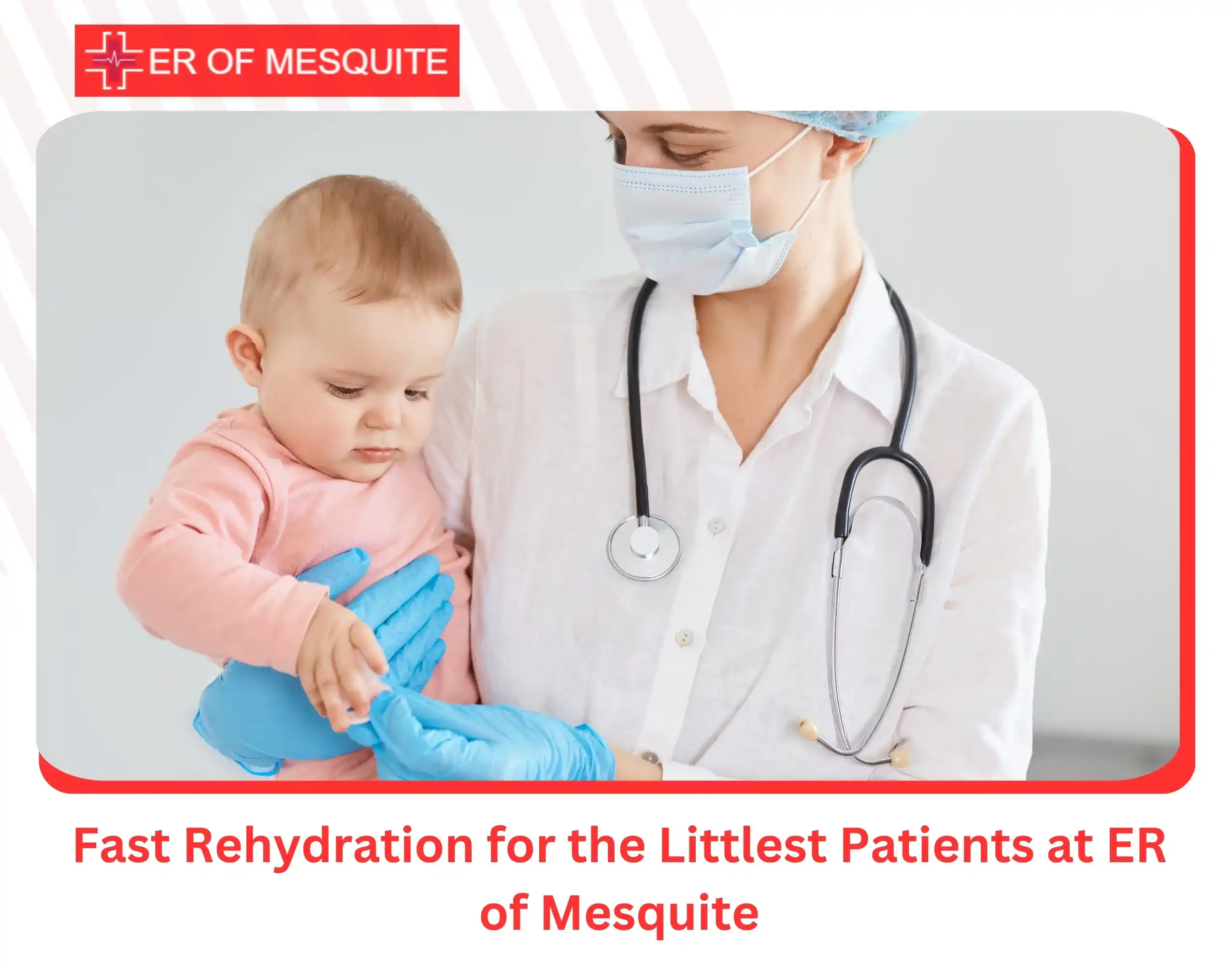
When rotavirus tips a baby into fluid loss you cannot keep up with, speed is what protects them, and that is what an emergency team is built for. The board-certified emergency medicine doctors at ER of Mesquite start intravenous rehydration the moment a baby stops keeping fluids down, run labs on site to catch electrolyte trouble early, and watch closely for how fast dehydration moves in the very young. There is no long lobby wait, and the doors are open around the clock for emergency care.
Frequently Asked Questions
1. How long is rotavirus contagious?
A baby can spread rotavirus before symptoms start and for several days after they ease, because the virus keeps shedding in stool. Careful handwashing and surface cleaning matter through the whole stretch, not just the sick days.
2. What does rotavirus diarrhea look like in a baby?
Rotavirus diarrhea is frequent, very watery, and often pale or greenish with a strong smell. Blood or mucus is not typical of rotavirus, so if you see either, treat it as a reason to get the baby evaluated.
3. Can a vaccinated baby still get rotavirus?
Yes, but usually a mild version. The rotavirus vaccine prevents most severe illness and hospitalization rather than every infection, so a protected baby who does get sick tends to recover quickly with fluids.
4. How is rotavirus different from norovirus?
Both cause vomiting and diarrhea, but rotavirus mainly affects infants and young children and is vaccine-preventable, while norovirus hits all ages and runs a shorter one-to-three-day course.
5. When is rotavirus an emergency in a baby?
Rotavirus is an emergency when dehydration shows: no wet diaper for several hours, no tears, a sunken soft spot, or unusual lethargy. Infants lose fluids fast, so these signs mean act now.