

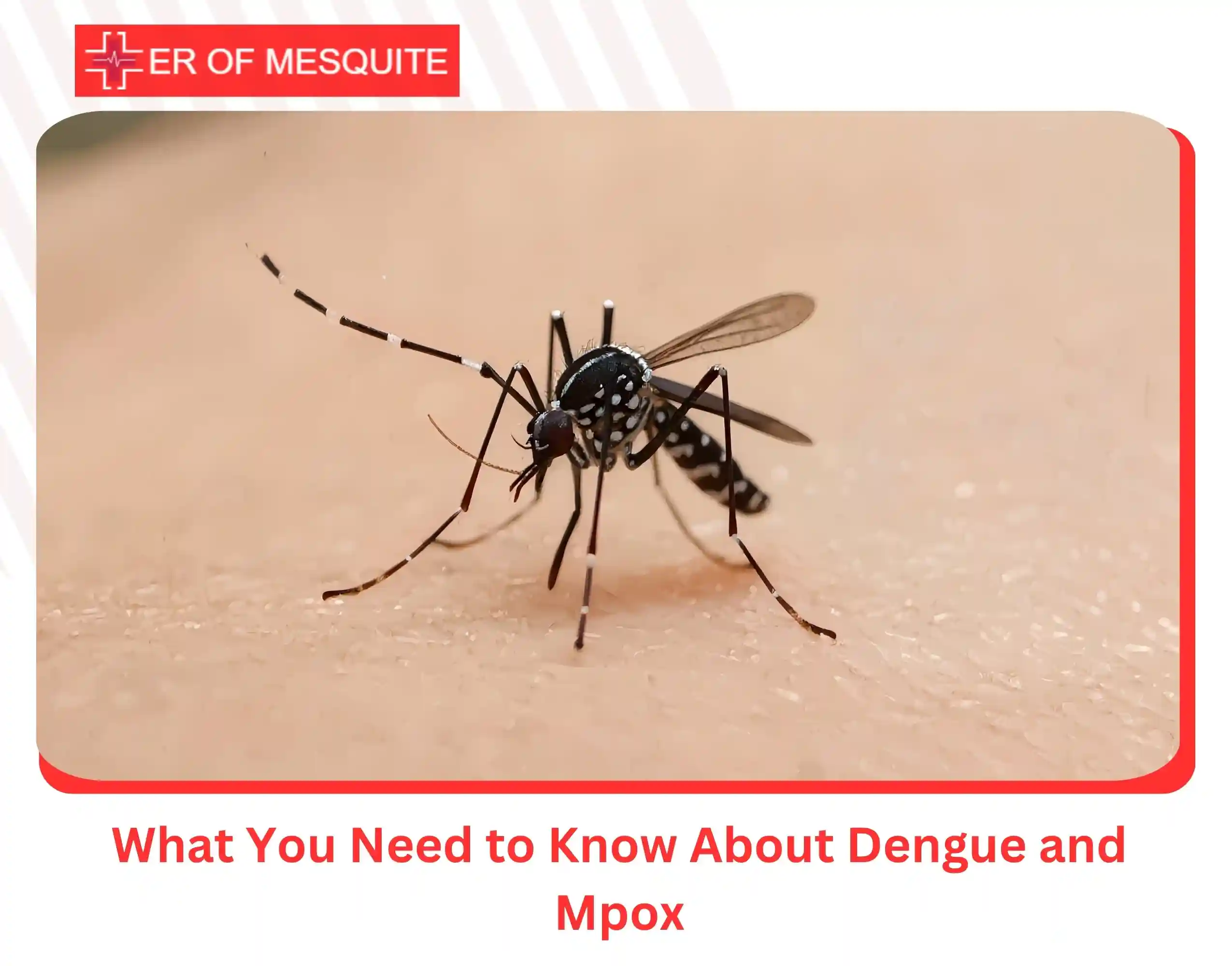
Dengue and mpox are two viral infections that have gained increased attention across the U.S. due to travel-related cases, local outbreaks, and shifting transmission patterns. Both can start with familiar symptoms like fever and body aches, which makes early identification difficult. But the viruses behave very differently, spread through different routes, and carry different risks.
Recognizing dengue and mpox symptoms early, and knowing when they require emergency care, can prevent serious complications.
What Is Dengue?
Dengue is a mosquito-borne viral infection caused by one of four dengue virus serotypes. It is most common in tropical and subtropical regions, but travel-related cases are reported across the U.S. every year, and locally acquired cases have occurred in Texas and Florida.
How Dengue Spreads
Dengue transmits through the bite of infected Aedes mosquitoes, primarily Aedes aegypti. It does not spread directly from person to person. The same mosquito species also carries Zika and chikungunya, which means dengue risk areas often overlap with other mosquito-borne diseases.
Common Dengue Symptoms
Dengue and mpox symptoms differ significantly in presentation. Dengue symptoms usually appear 4 to 10 days after a mosquito bite and include:
- High fever (104°F or higher), often sudden in onset
- Severe headache, concentrated behind the eyes
- Muscle and joint pain (sometimes called “breakbone fever” because of its intensity)
- Nausea and vomiting
- Skin rash, typically appearing 2 to 5 days after fever begins
- Fatigue and general malaise
Most cases are mild and resolve within a week. But a subset of patients, particularly those with a second dengue infection from a different serotype, can progress to severe dengue. This progression is what makes dengue fever treatment ER visits necessary.
If body aches are your dominant early symptom, dengue should be on the differential if you’ve traveled to an endemic area within the past two weeks.
What Is Mpox?
Mpox (formerly monkeypox) is a viral infection caused by the mpox virus, a member of the Orthopoxvirus family. Once considered rare outside Central and West Africa, mpox gained global attention during the 2022 outbreak and continues to circulate at low levels.
How Mpox Spreads
Unlike dengue, mpox transmits through direct human contact:
- Prolonged skin-to-skin contact with an infected person’s rash or lesions
- Contact with contaminated materials (bedding, clothing, towels)
- Respiratory droplets during extended face-to-face interaction
- Vertical transmission from mother to newborn
Mpox does not spread through casual contact, brief conversations, or walking past someone in a public space. Understanding the transmission route matters because it determines who is at risk and what precautions to take.
Common Mpox Virus Symptoms
Mpox virus symptoms typically develop 1 to 3 weeks after exposure and follow a recognizable pattern:
- Fever and chills, often the first sign
- Swollen lymph nodes (a distinguishing feature that separates mpox from chickenpox and many other rash-causing illnesses)
- Fatigue and muscle aches
- Headache
- A characteristic rash that progresses through stages: flat spots, raised bumps, fluid-filled blisters, pustules, and finally scabs
The rash can appear on the face, hands, feet, genitals, or inside the mouth. Some patients develop only a few lesions; others develop hundreds. Lesion pain can range from mild to severe.
Dengue vs. Mpox: How to Tell Them Apart
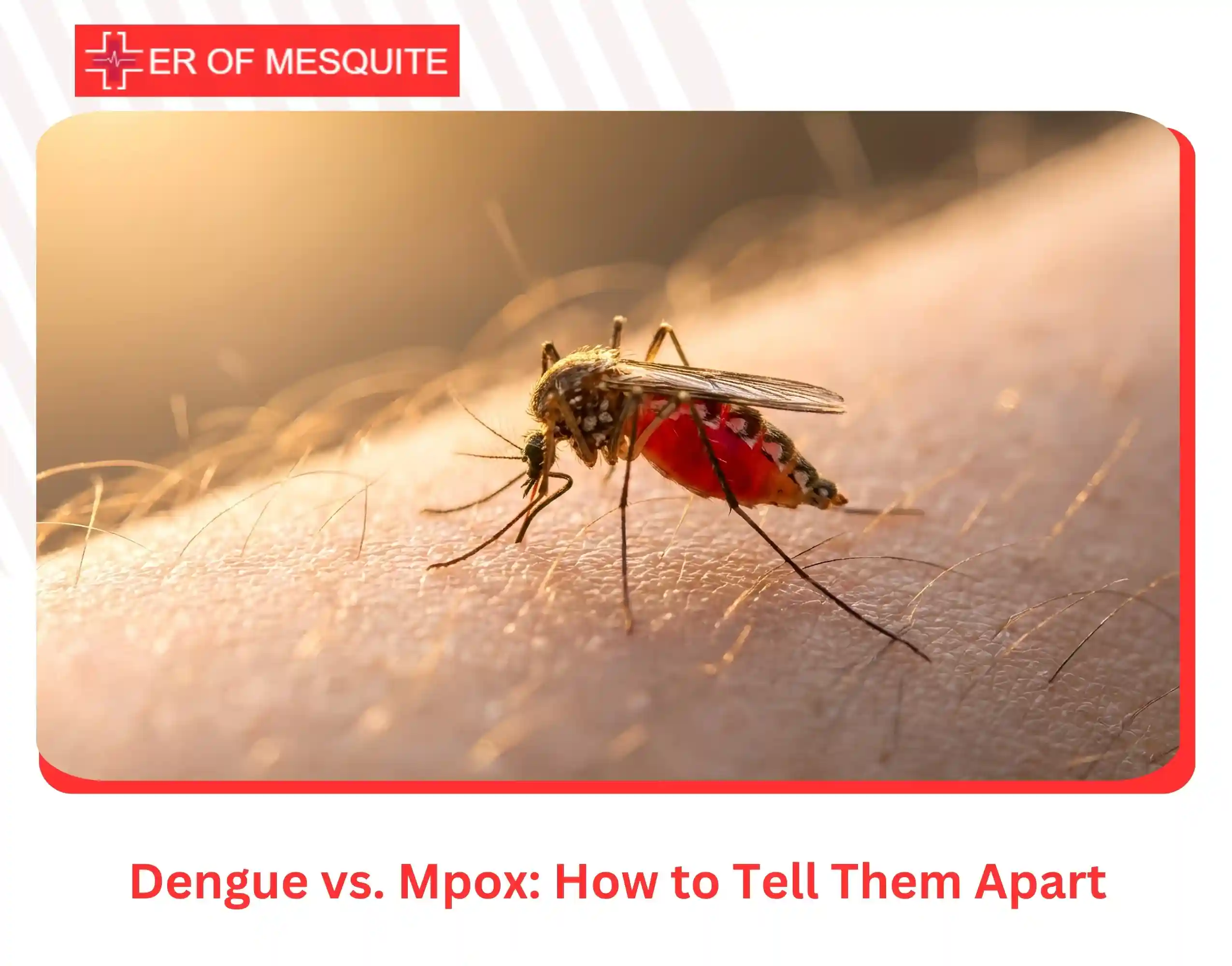
Because both infections begin with fever and body aches, the overlap can create confusion. But several features distinguish them clearly.
| Feature | Dengue | Mpox |
| Transmission | Mosquito-borne | Direct human contact |
| Incubation | 4 to 10 days | 1 to 3 weeks |
| Rash type | Flat, mild, late onset | Raised blisters/pustules, prominent |
| Pain pattern | Severe muscle and joint pain | Moderate aches, painful lesions |
| Lymph Nodes | Usually normal | Swollen (key differentiator) |
| Bleeding risk | Yes, in severe dengue | No |
| Eye involvement | Rare | Possible, risk of vision loss |
The fastest way to distinguish dengue and mpox symptoms at a glance: dengue hits with sudden high fever and deep muscle pain but minimal rash. Mpox builds gradually with a prominent, painful rash and swollen lymph nodes. If you’ve had a mosquito-heavy trip, think dengue. If you’ve had close physical contact with someone who was ill, think mpox.
When Do Dengue and Mpox Symptoms Become Dangerous?
Most dengue and mpox cases resolve with supportive care at home. But both can escalate, and knowing the warning signs determines whether you manage symptoms safely or face a medical emergency.
Severe Dengue Warning Signs
Severe dengue, also called dengue hemorrhagic fever, usually develops 24 to 48 hours after the initial fever breaks. This timing catches patients off guard because they feel like they’re improving.
Red flags include:
- Severe abdominal pain or tenderness
- Persistent vomiting (3 or more times in 24 hours)
- Bleeding from the gums, nose, or under the skin (petechiae)
- Blood in vomit or stool
- Rapid breathing difficulty
- Extreme fatigue, restlessness, or irritability
- Rapid drop in platelet count
These signs indicate plasma leakage and internal bleeding. Without dengue fever treatment ER intervention, severe dengue can progress to shock and organ failure within hours.
Severe Mpox Warning Signs
Mpox is rarely fatal but can become serious in certain populations, including immunocompromised individuals, young children, and pregnant women.
Seek viral infection emergency care if you experience:
- Extensive rash covering large areas of the body
- Secondary bacterial infection of lesions (increasing redness, warmth, pus, or spreading pain)
- Lesions near or inside the eyes (risk of permanent vision damage)
- Difficulty breathing or swallowing
- Severe weakness or inability to eat or drink
- Signs of dehydration from prolonged fever or poor intake
When to Go to the ER

Not every case of dengue or mpox requires an emergency room visit. But viral infection emergency care becomes necessary when your body can no longer manage the infection on its own.
Go to the ER immediately if you experience:
- Difficulty breathing or rapid, shallow breaths
- Signs of bleeding (gums, nose, bruising, blood in stool or vomit)
- Confusion, disorientation, or altered consciousness
- Severe dehydration (no urination for 8+ hours, dizziness, dry mouth)
- Rapid worsening of symptoms after a period of improvement
- Lesions affecting the eyes, throat, or airway (mpox)
- High fever that does not respond to over-the-counter medication
If you’ve recently traveled to an area with known dengue activity, or if you’ve had close contact with someone diagnosed with mpox, mention this immediately when you arrive. It changes the diagnostic approach and infection control measures.
For viral infections that resemble flu-like illness, testing is the only way to confirm the cause. Our on-site laboratory provides rapid results to guide treatment decisions.
How Dengue and Mpox Are Treated in the ER
Neither dengue nor mpox has a single targeted cure. Treatment in both cases is supportive, meaning the goal is to manage symptoms, prevent complications, and stabilize patients while the immune system clears the virus.
Dengue Fever Treatment in the ER
Dengue fever treatment ER protocols focus on fluid management and monitoring. The biggest risk in severe dengue is plasma leakage leading to shock, so the medical team prioritizes:
- IV fluid resuscitation to maintain blood pressure and organ perfusion
- Serial platelet and hematocrit monitoring to track severity
- Pain management
- Blood transfusion
- Close monitoring
Patients with mild dengue are typically monitored and discharged with clear return precautions. Those with severe dengue may require prolonged observation or transfer to a facility with ICU capabilities.
Mpox Treatment in the ER
For most patients, mpox treatment focuses on symptom control:
- Pain management for lesion discomfort
- Wound care to prevent secondary bacterial infection
- Antiviral therapy
- IV fluids if dehydration has developed
- Ophthalmology referral if lesions involve the eyes
- Infection control isolation during evaluation
Post-exposure prophylaxis (PEP) with the smallpox vaccine may be offered to close contacts within 4 days of exposure to prevent or reduce severity.
Prevention
Preventing Dengue
- Avoid mosquito bites (repellents, nets)
- Remove standing water
- Wear protective clothing
Preventing Mpox
- Avoid close contact with infected individuals
- Practice good hygiene
- Use protective measures in healthcare settings
Both viruses circulate differently than respiratory infections like influenza or H5N1, and prevention strategies reflect those differences. Mosquito control for dengue, contact precautions for mpox.
Key Takeaway
Dengue and mpox symptoms can overlap in the early stages, but the viruses spread differently, progress differently, and require different clinical responses. Most cases are mild. But severe dengue can cause life-threatening bleeding and shock, and mpox can lead to secondary infections, vision loss, or airway compromise in vulnerable patients.
If you develop worsening symptoms after travel to a dengue-endemic area, or if a rash appears following close contact with a confirmed mpox case, get evaluated promptly. ER of Mesquite provides 24/7 viral infection emergency care with on-site labs, IV capability, and board-certified emergency physicians. Walk in anytime or call (214) 377-8495.
[Get Directions to ER of Mesquite]
Frequently Asked Questions (FAQs)
1. What are the first signs of dengue and mpox?
Dengue usually starts with high fever and body aches, while mpox often begins with fever, swollen lymph nodes, and rash.
2. Can dengue and mpox occur together?
Co-infection is rare but theoretically possible in regions where both viruses circulate. Proper diagnostic testing is the only way to confirm which virus (or viruses) is causing symptoms. Mention any recent travel or known exposures when seeking care.
3. Is dengue more dangerous than mpox?
Severe dengue can be life-threatening due to bleeding complications, while mpox is usually milder but can become severe in vulnerable individuals.
4. When should I go to the ER for dengue?
Seek immediate care if you have bleeding, severe abdominal pain, or persistent vomiting.
5. How long does mpox recovery take?
Most mpox cases resolve within 2 to 4 weeks. The rash goes through defined stages over that period, and patients are considered contagious until all scabs have fallen off and new skin has formed underneath. Pain from lesions may persist after the infection clears.