

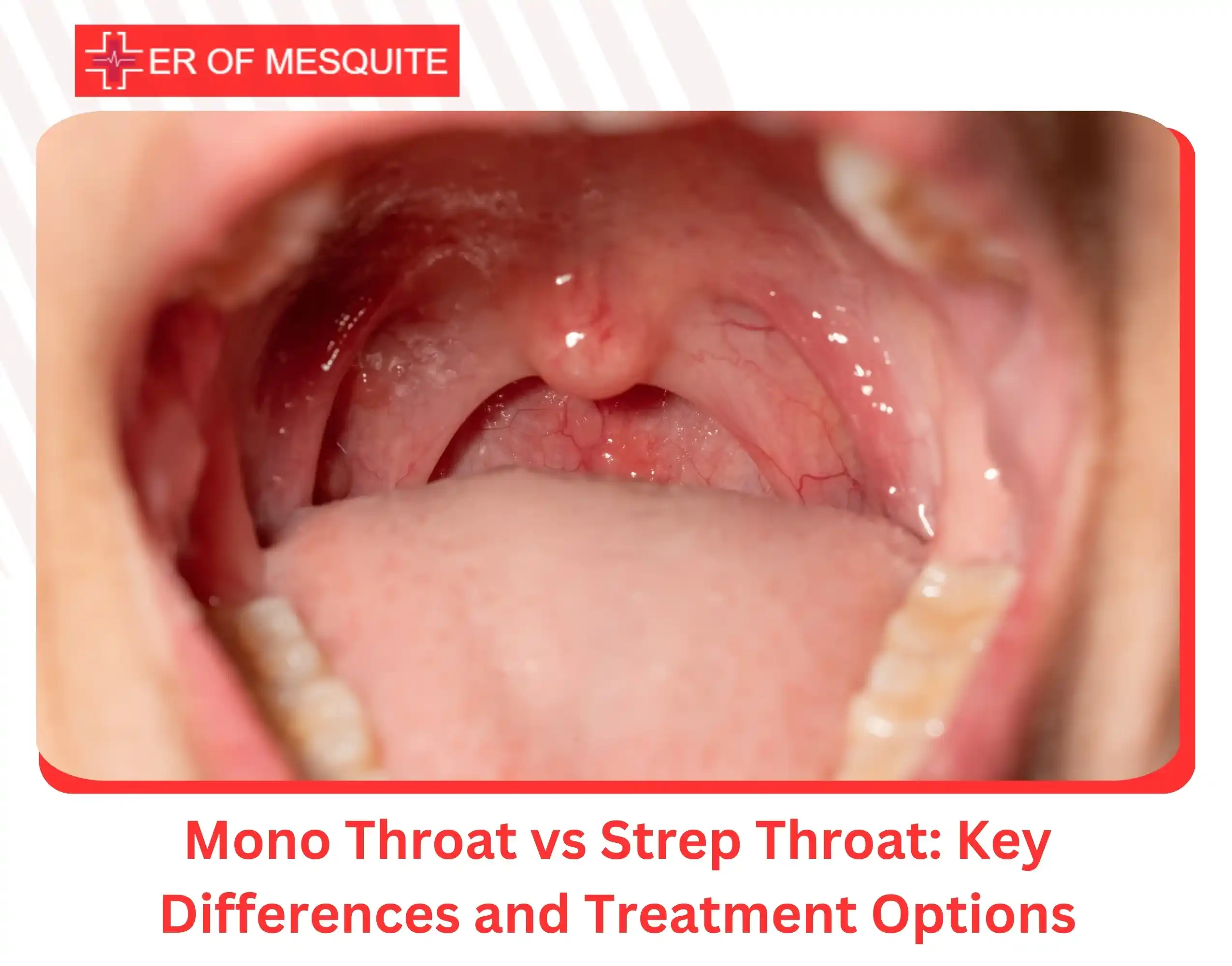
Fatigue is the one symptom that instantly separates mono from strep throat. Mono tends to come on gradually and causes overwhelming, long-lasting fatigue. Strep throat starts suddenly and causes mild tiredness that clears once antibiotics kick in.
Both conditions share symptoms; sore throat, fever, and difficulty swallowing, but strep throat is bacterial and mono is viral. This single distinction changes everything from treatment and recovery time to potential long-term risks.
Confusing the two can lead to unnecessary antibiotics, missed complications, or weeks of avoidable suffering. Below are the key differences between mono throat and strep throat, how each is diagnosed, and when symptoms warrant emergency care.
What Is Mononucleosis (Mono)?
Mononucleosis, commonly known as mono, is caused by the Epstein–Barr Virus (EBV). It spreads through saliva, which is why it is often called the “kissing disease.” But sharing drinks, utensils, or any close contact with an infected person can transmit it just as easily.
Key Clue: Fatigue
Fatigue in mono is not normal tiredness. Many people describe it as crushing or heavy; sleep doesn’t fix it. It can last weeks to months in some cases, long after the sore throat improves.
What Is Strep Throat?

Strep throat is a bacterial infection caused by Group A Streptococcus. It accounts for millions of throat infections every year, with school-aged children being the most affected group.
Strep throat causes severe throat pain, high fever, and swollen glands. Unlike mono, strep throat often hits suddenly. You may feel fine in the morning and miserable by evening.
Key Clue: Throat Pain Without Fatigue
With strep, tiredness stays mild. You feel unwell, but not the kind of bone-deep exhaustion that keeps mono patients in bed for weeks. Once antibiotics begin, symptoms typically improve within 24 to 48 hours.
Mono Throat Vs Strep Throat: 5 Key Differences
Mono throat vs strep throat both cause sore throat and fever, but they differ in onset, fatigue level, and complications. Let’s break down these differences, so you can determine when medical evaluation is needed.
1. Sore Throat Severity
Throat pain develops gradually and is usually less severe than strep, but tonsils appear noticeably swollen.
Strep Throat
- Sudden, severe throat pain
- Pain when swallowing
- Red, swollen tonsils with or without white patches
Mono
- Throat pain is usually less severe than strep, but tonsils appear swollen
2. Extreme Fatigue
The most important distinguishing symptom of mono is extreme fatigue.
- Mono fatigue may last weeks or months in some individuals.
- Strep throat causes tiredness, but not this level of exhaustion.
3. Abdominal or Left-Sided Pain
Mono can enlarge the spleen, causing:
- Left upper-abdominal pain
- Pressure after eating
- Pain that worsens with deep breathing
This does not occur with strep throat.
4. Fever Pattern
- Strep throat: High fever that spikes suddenly, often above 101°F
- Mono: Fever tends to fluctuate and may stay mild or come and go over days
5. Rash After Antibiotics
A telltale mono clue often surfaces by accident. If a doctor prescribes amoxicillin for a suspected strep infection and a widespread rash develops within days, the actual diagnosis is almost certainly mono. This amoxicillin rash occurs in a significant percentage of mono patients and is one of the most reliable clinical indicators.
How Doctors Test for Mono Vs Strep
Since mono vs strep throat overlap in early symptoms, lab testing is the only way to confirm which one you are dealing with.
Strep Throat Tests
Rapid Strep Test: A throat swab that detects bacterial antigens within 10–20 minutes.
Throat Culture: A more accurate test, used when the rapid test is negative.
Mono Tests
- Monospot Test / Heterophile Antibody Test: Produces results in minutes, though it can return false negatives in the first week of illness.
- EBV Antibody Panel: More sensitive, used when monospot is negative, but symptoms persist.
- CBC (Complete Blood Count): Often shows elevated lymphocytes typical of mono.
Treatment: Mono Throat Vs Strep Throat
Mono Treatment
Mono is viral, so you need supportive care, not antibiotics.
Treatment includes:
- Extended rest (weeks, not days)
- Fluids
- NSAIDs or acetaminophen
- Throat-soothing measures
- Avoiding sports for 3–4 weeks (spleen protection)
Most mono treatment involves supportive care and rest.
Strep Throat Treatment
Strep throat requires antibiotics not just to relieve symptoms, but to prevent serious complications like rheumatic fever and kidney inflammation.
Typical antibiotics include:
- Penicillin
- Amoxicillin
- Cephalexin (if allergic)
| Feature | Strep Throat | Mono (EBV) |
| Cause | Bacterial (Group A Strep) | Viral (EBV) |
| Contagious? | Highly | Highly |
| Sore Throat Severity | Sudden & severe | Milder to moderate |
| Fever | High | Low–high |
| Fatigue | Mild–moderate | Severe (hallmark symptom) |
| Lymph Nodes | Tender, under jaw | Generalized (neck, armpits) |
| Abdominal Pain | Rare | Common due to spleen enlargement |
| Tonsils | White patches | Swollen/coated |
| Treatment | Antibiotics | Supportive care only |
| Recovery | 3–5 days on antibiotics | 2–6 weeks; fatigue may last longer |
When to See a Doctor or Visit the ER

Most sore throats resolve on their own. But seek immediate medical evaluation if you experience:
- Difficulty breathing
- Severe trouble swallowing
- Drooling
- Neck stiffness
- Severe dehydration
- Left-sided abdominal pain (possible spleen rupture)
- Chest pain
- Persistent high fever
Testing is recommended if:
- Symptoms last more than 48 hours
- Fatigue is severe
- You can’t drink fluids
- Symptoms worsen instead of improve
A sore throat that does not improve after 48 hours, or one that comes with white spots on the tonsils, warrants testing to rule out both strep and mono before symptoms progress.
How to Prevent Strep Throat & Mono
Preventing Strep Throat
- Frequent handwashing
- Avoid sharing drinks/utensils
- Keep distance from sick individuals
Untreated strep can lead to rare but serious complications, including scarlet fever and in extreme cases, streptococcal toxic shock syndrome. Early detection and treatment eliminate these risks.
Preventing Mono
- Avoid sharing drinks, food, or lip products
- Avoid kissing someone who is sick
- Practice good hygiene
Final Thoughts: Mono Throat Vs Strep Throat
Mono and strep throat may start with the same sore throat, but they take different paths. Strep clears in days with the right antibiotic. Mono requires weeks of rest and carries risks like spleen enlargement that antibiotics cannot touch. If your sore throat lasts beyond 48 hours, comes with crushing fatigue, or is not responding the way you expected, get tested.
ER of Mesquite is open 24/7 with on-site rapid strep and mono testing, imaging, and immediate treatment, so you leave with answers, not guesswork.
FAQs About Mono Vs Strep Throat
1. Can you have mono and strep throat at the same time?
Yes. Co-infections occur, particularly in teens and young adults. When mono weakens the immune system, it can make the throat more susceptible to a secondary strep infection.
2. Do antibiotics cure mono?
No. Mono is viral, and antibiotics don’t help.
3. How long does mono last?
Acute symptoms last 2 to 6 weeks. Fatigue can persist for months in some cases, gradually improving over time.
4. How long does strep throat last?
With antibiotics, symptoms improve within 24–48 hours.
5. Can you go to work or school with strep?
CDC recommends waiting 24 hours after starting antibiotics.
6. Can mono enlarge the spleen?
Yes, and this may lead to abdominal pain or (rarely) rupture.
7. Is mono more contagious than strep?
Strep spreads faster in group settings like schools and offices. Mono spreads more through direct saliva contact and can remain contagious for weeks to months after symptoms resolve.