

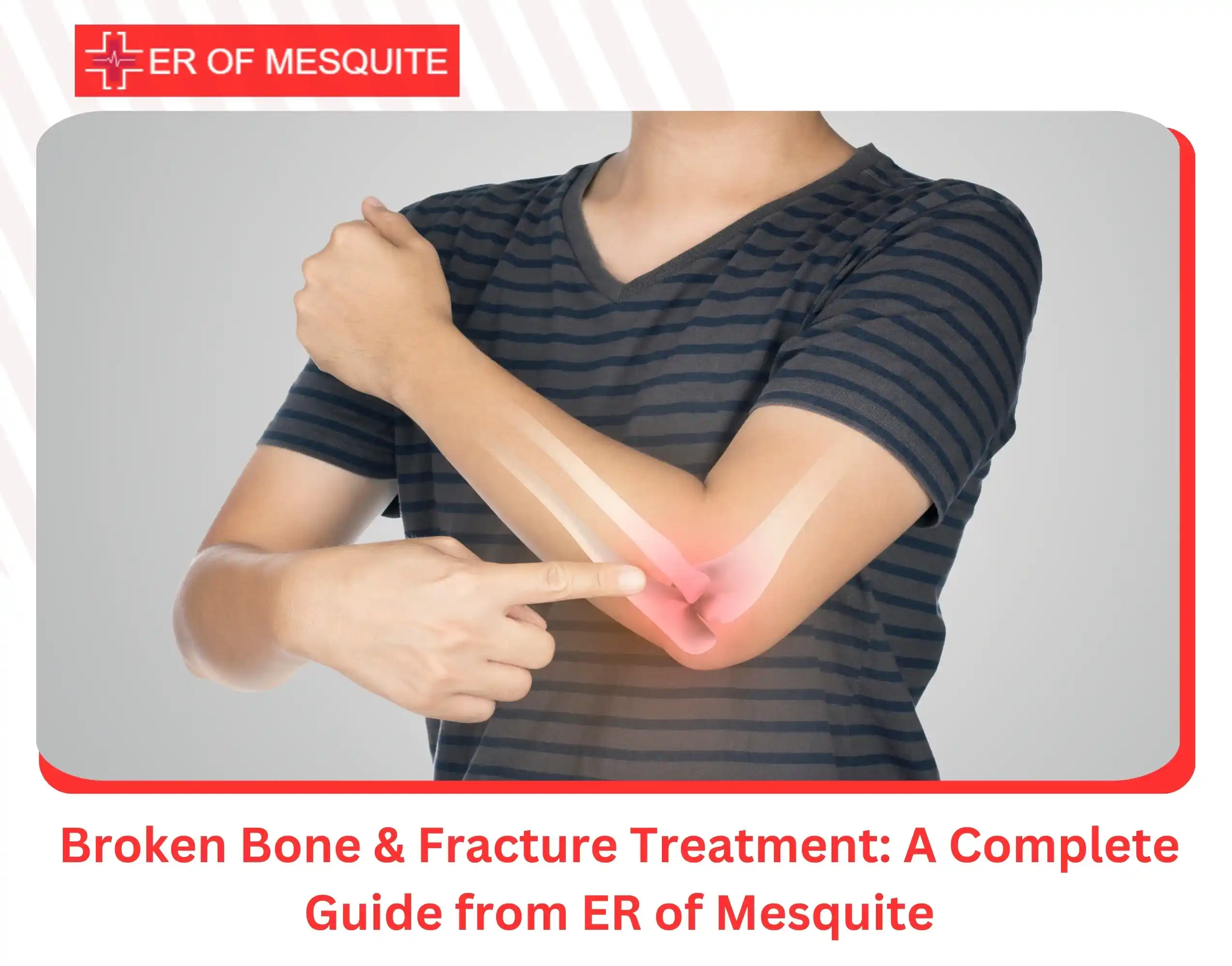
A bad fall on the playground. A wrong step off a curb. A weekend football tackle that ends with a sickening crunch. Broken bones happen to everyone — kids, athletes, working adults, seniors — and they don’t always look as obvious as TV makes them seem. Many people walk around with cracked bones, convinced it’s just a bad sprain, until the pain gets worse and X-rays reveal the truth.
This guide from ER of Mesquite walks you through the different types of fractures, how to recognize a real break, what to do before you get help, and exactly what we’ll do when you arrive. Our 24/7 freestanding emergency room in Mesquite, TX has on-site digital X-ray, board-certified physicians, and dedicated pediatric care — meaning you (or your child) can get answers, splints, and pain relief within minutes of walking through the door.
1. Understanding Broken Bones & Fractures
What’s the Difference Between a Break and a Fracture?
In medicine, “break” and “fracture” mean the same thing. A fracture is any disruption in the continuity of a bone — from a tiny hairline crack to a complete shattering. So if you’ve been told you have a fracture, you have a broken bone. There’s no “worse” version implied by either word.
How Bones Heal — The 4 Stages
Bone is living tissue, and healing happens in predictable phases:
- Hematoma (Days 1–5): Blood pools at the fracture site, forming a clot that creates the framework for repair.
- Inflammation (Days 1–7): Cells rush to the site to clean up debris and start healing.
- Callus formation (Weeks 2–6): New bone tissue (a soft “callus”) forms a bridge across the break.
- Remodeling (Months to years): The callus hardens and reshapes back into normal bone structure.
Why Some Fractures Are Hidden Without an X-Ray
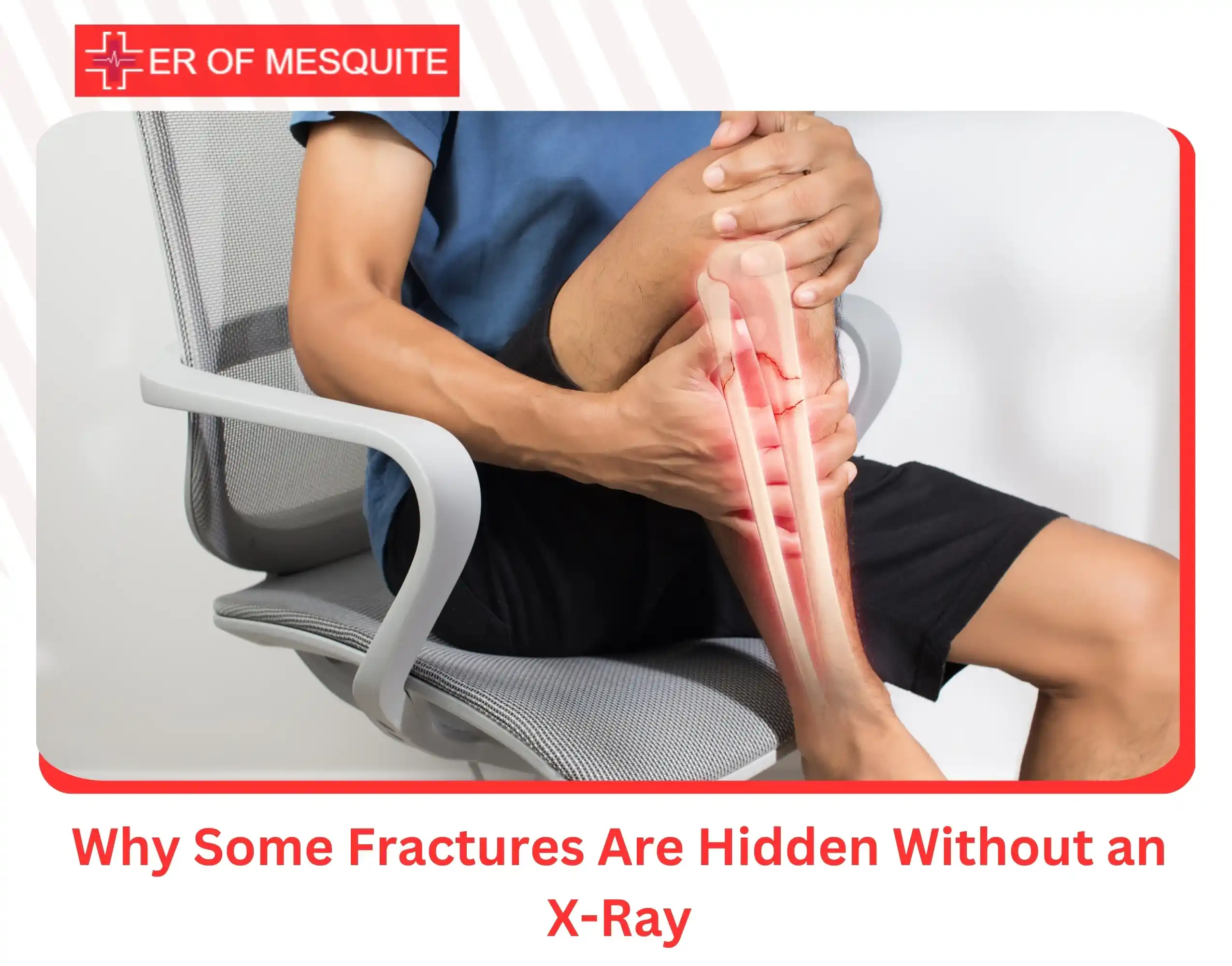
Hairline and stress fractures often produce only mild swelling and bearable pain — yet they’re real breaks that need protection to heal properly. Without imaging, they’re easy to dismiss as sprains. That’s why X-ray confirmation matters: untreated, even small fractures can worsen, displace, or heal incorrectly.
2. Common Types of Fractures
Not every break is the same. The type of fracture you have determines treatment, recovery time, and whether you’ll need a specialist.
Closed vs. Open (Compound) Fractures
A closed fracture stays under the skin. An open fracture (also called a compound fracture) breaks through the skin — creating a serious risk of infection. Open fractures always require emergency care.
Stable vs. Displaced Fractures
In a stable fracture, the broken ends remain in alignment and can often heal in a cast. A displaced fracture means the bones have shifted out of position and may need reduction (manual realignment) or surgical correction.
Stress Fractures, Hairline Fractures, and Greenstick Fractures
- Stress fractures — small cracks caused by repetitive impact, common in runners, dancers, and military recruits.
- Hairline fractures — tiny cracks that may not show on initial X-rays; often need follow-up imaging.
- Greenstick fractures — common in children, where the bone bends and partially breaks (like a young tree branch).
Comminuted, Spiral, and Oblique Fractures
- Comminuted — bone shatters into three or more pieces, usually from severe impact.
- Spiral — a twisting force creates a diagonal break around the bone.
- Oblique — a slanted break, typically from an angled blow.
| Fracture Type | What It Is | Common In |
| Closed (Simple) | Bone breaks but doesn’t pierce skin | All ages — most common |
| Open (Compound) | Broken bone breaks through the skin | High-impact injuries, accidents |
| Stable | Bone ends remain aligned | Falls, sports injuries |
| Displaced | Bone ends are out of alignment | Often requires reduction |
| Hairline / Stress | Tiny crack, often invisible at first | Runners, athletes, military |
| Greenstick | Bone bends and partially breaks | Children — flexible bones |
| Comminuted | Bone shatters into 3+ pieces | High-impact trauma |
| Spiral | Twisting force breaks bone diagonally | Sports, slip injuries |
3. Common Causes of Broken Bones
Falls — The #1 Cause Across All Ages
Falls cause more broken bones than any other mechanism. Toddlers fall while learning to walk, school-age kids fall from playground equipment, adults slip in bathrooms or on icy steps, and older adults fall from standing height — often resulting in hip, wrist, or shoulder fractures.
Sports Injuries
Football, basketball, soccer, gymnastics, skateboarding, and cycling produce the highest fracture rates. Common sports fractures include wrists, ankles, collarbones, and fingers.
Car Accidents & High-Impact Trauma
Motor vehicle crashes can produce multiple fractures simultaneously — especially of the ribs, pelvis, legs, and arms. These often require emergency-grade evaluation including CT imaging to assess for hidden injuries.
Direct Blows & Workplace Injuries
Construction work, manufacturing, and warehouse jobs come with risk of crushing injuries, falling objects, and machinery accidents. Hand and foot fractures are especially common.
Stress Fractures From Repetitive Use
Long-distance runners, dancers, and athletes who train through pain often develop tiny stress fractures — most commonly in the foot or shin. Without rest, these can grow into complete breaks.
Pathological Fractures
Bones weakened by disease can break under minimal force. Causes include osteoporosis (especially in postmenopausal women and older adults), bone cancer, and metabolic conditions. A fracture from a minor fall in someone over 50 should always trigger a bone density check.
4. Recognizing the Symptoms of a Broken Bone
Pain, Swelling & Bruising — The Classic Trio
Most fractures cause sharp, immediate pain at the site of injury that worsens with movement or pressure. Swelling and bruising develop within minutes to hours, sometimes spreading to nearby areas.
Visible Deformity or Bone Through Skin
If the injured area looks bent, twisted, or shorter than the other side — or if you can see bone — it’s almost certainly a fracture and an emergency. Don’t try to push the bone back or straighten the limb yourself.
Inability to Bear Weight or Move the Limb
If you can’t put weight on a leg, grip with a hand, or move a limb without severe pain, treat it as a likely fracture until imaging proves otherwise. Many people “walk on” broken feet or ankles for days, making the injury worse.
Sprain vs. Fracture — How to Tell the Difference
This is one of the most common questions in emergency care. Here’s a quick comparison:
| Symptom | Sprain | Fracture |
| Sound at injury | Usually none, sometimes a pop | Often a snap, crack, or crunch |
| Pain location | Around the joint, ligaments | Pinpoint pain over the bone itself |
| Swelling | Gradual, mild to moderate | Often immediate and severe |
| Deformity | Rare | Possible — bone may look out of place |
| Weight bearing | Painful but possible | Usually impossible |
| Diagnosis | Physical exam | Requires X-ray confirmation |
Bottom line: you can’t reliably tell a sprain from a fracture without an X-ray. Many “sprains” diagnosed without imaging turn out to be fractures — and they don’t heal correctly without proper treatment.
| ⚡ Suspect a broken bone? Don’t wait it out or settle for an exam without imaging. Walk in 24/7 to ER of Mesquite at 1745 N Belt Line Rd, Mesquite, TX or call (214) 377-8495. On-site digital X-ray, board-certified physicians, no appointment needed. |
5. When a Broken Bone Becomes a Medical Emergency
Symptoms That Mean “Call 911 Now”
- Bone visible through the skin (open fracture)
- Heavy bleeding that won’t stop with pressure
- Suspected spine, skull, or pelvic injury
- Numbness, blue color, or absent pulse below the injury
- Multiple injuries from a fall, crash, or major trauma
- Loss of consciousness, confusion, or signs of shock
Open Fractures, Compound Injuries & Bleeding
An open fracture is a true emergency — the broken bone has pierced the skin, exposing tissue to bacteria. Infection risk is high, and surgical cleaning is usually needed. Cover the wound loosely with a clean cloth, apply pressure to control bleeding, and don’t try to push bone back.
Signs of Compartment Syndrome
Compartment syndrome is a rare but limb-threatening complication where pressure builds up inside muscle compartments after a fracture, cutting off blood flow. Warning signs:
- Pain that’s far worse than expected, even with pain medication
- Tightness, swelling, or shiny skin over the area
- Numbness, tingling, or weakness
- Pain that worsens when the affected muscle is stretched
Without rapid treatment (within hours), compartment syndrome can lead to permanent muscle and nerve damage. If you suspect it after a fracture, get to an ER immediately.
Spinal, Skull & Pelvic Fracture Warnings
Suspect a spine fracture if there’s been a fall from height, a diving injury, or a high-speed crash — especially with neck or back pain, weakness, or numbness. Don’t move the person; call 911 and let paramedics stabilize the spine. Skull fractures may show clear fluid from the nose or ears, severe headache, or unequal pupils. Pelvic fractures often present with severe groin pain and inability to stand.
Decision Matrix — 911, ER, or Urgent Care?
| Call 911 Immediately | Go to ER Now | Urgent Care May Be OK |
| Bone visible through the skin | Severe pain, swelling, or deformity | Mild swelling, suspected sprain |
| Heavy bleeding from the injury | Inability to bear weight or move limb | Minor finger or toe injury |
| Suspected spine, skull, or pelvic injury | Suspected wrist, arm, ankle, or rib break | Pain manageable with ice and OTC meds |
| Numbness, blue color, or no pulse below injury | Pediatric injuries — kids need imaging | No deformity or visible bone |
| Multiple injuries from a fall or crash | Open wound near a joint | Stable injury, full range of motion |
6. What to Do (and Not Do) Before Reaching the ER
Immediate First-Aid Steps
- Stop the activity immediately and protect the injured area from further harm.
- Stabilize and immobilize — don’t move the limb more than necessary.
- Apply ice (wrapped in cloth) for 15–20 minutes to reduce swelling.
- Elevate the injured area above heart level if possible.
- Control bleeding with clean, gentle pressure if there’s a wound.
- Get to the ER for X-ray confirmation and proper splinting.
How to Immobilize the Injured Area
If you have to transport someone with a suspected fracture, support the limb above and below the injury site. A rolled magazine, towel, or piece of cardboard secured with tape or cloth strips can serve as a temporary splint. Keep the limb in the position you found it — don’t try to straighten it.
Pain Management While You Wait
Over-the-counter pain medications like ibuprofen or acetaminophen can take the edge off while you head to the ER. Avoid eating or drinking in case surgery becomes necessary — many fracture reductions and procedures require an empty stomach.
What NOT to Do
- Don’t try to realign a deformed limb yourself — you can damage nerves, blood vessels, and worsen the injury.
- Don’t push exposed bone back under the skin — cover the wound and seek emergency care.
- Don’t walk on it “to test” if it’s broken. If walking causes severe pain, treat it as fractured.
- Don’t apply heat — this increases swelling and bleeding into the tissue.
- Don’t ignore numbness or color change below the injury — these are signs of nerve or vascular damage.
7. Broken Bone Treatment at ER of Mesquite
From the moment you walk in, ER of Mesquite treats fractures with the same urgency, equipment, and expertise as a hospital ER — without the long wait. You’ll be evaluated within minutes by a board-certified emergency physician.
Our 24/7 Fracture Care Protocol
After rapid initial assessment, we focus on three goals: pain control, accurate diagnosis, and proper stabilization. Most patients have IV pain medication started before imaging — so you don’t have to suffer through the workup.
Diagnostic Tools — Hospital-Grade, On-Site
- Digital X-ray — the primary tool for diagnosing fractures; results within minutes. Learn about our digital X-ray services.
- CT scan — used for complex fractures, suspected spinal injuries, and head trauma. Learn about our CT scan services.
- Ultrasound — helpful for soft tissue evaluation and pediatric fracture screening. See our ultrasound services.
Treatment Pathways — Splinting, Casting, Reduction & Referral
Once we confirm the fracture, treatment depends on the type and severity. Learn about our musculoskeletal injury and orthopedic care services:
- Splinting — for most stable fractures; allows for swelling before casting.
- Casting — rigid immobilization for select fractures, sometimes done at follow-up with an orthopedist.
- Closed reduction — manual realignment of displaced fractures, usually with sedation or local anesthesia.
- Pain management — IV medications during evaluation and prescriptions for at-home recovery.
- Wound care & antibiotics — for open fractures and lacerations.
- Orthopedic referral — for fractures requiring surgery, complex reduction, or specialty follow-up.
Pediatric Fracture Care
Children’s bones are still growing and break differently than adult bones — including greenstick fractures, buckle fractures, and growth plate injuries. Our pediatric ER team is trained to evaluate children of all ages with kid-appropriate communication, child-sized equipment, and parents kept informed every step of the way.
What to Expect From Walk-In to Discharge
As a freestanding emergency room, we deliver hospital-grade emergency care without the long hospital wait. Expect rapid evaluation, immediate pain relief, on-site imaging, splinting or reduction as needed, and a clear discharge plan with prescriptions, follow-up instructions, and orthopedic referrals when appropriate.
8. Healing & Recovery After a Fracture
Typical Healing Timelines by Bone & Age
Healing time varies by bone, age, overall health, and the severity of the break. General estimates:
- Fingers and toes: 3–4 weeks
- Wrist: 6–8 weeks
- Ankle: 6–8 weeks
- Forearm: 8–10 weeks
- Collarbone: 6–10 weeks
- Tibia (shin): 3–4 months
- Femur (thigh): 4–6 months, often surgical
- Hip: 3–6 months, often surgical
Children typically heal 30–50% faster than adults. Older adults, smokers, and people with diabetes may heal slower.
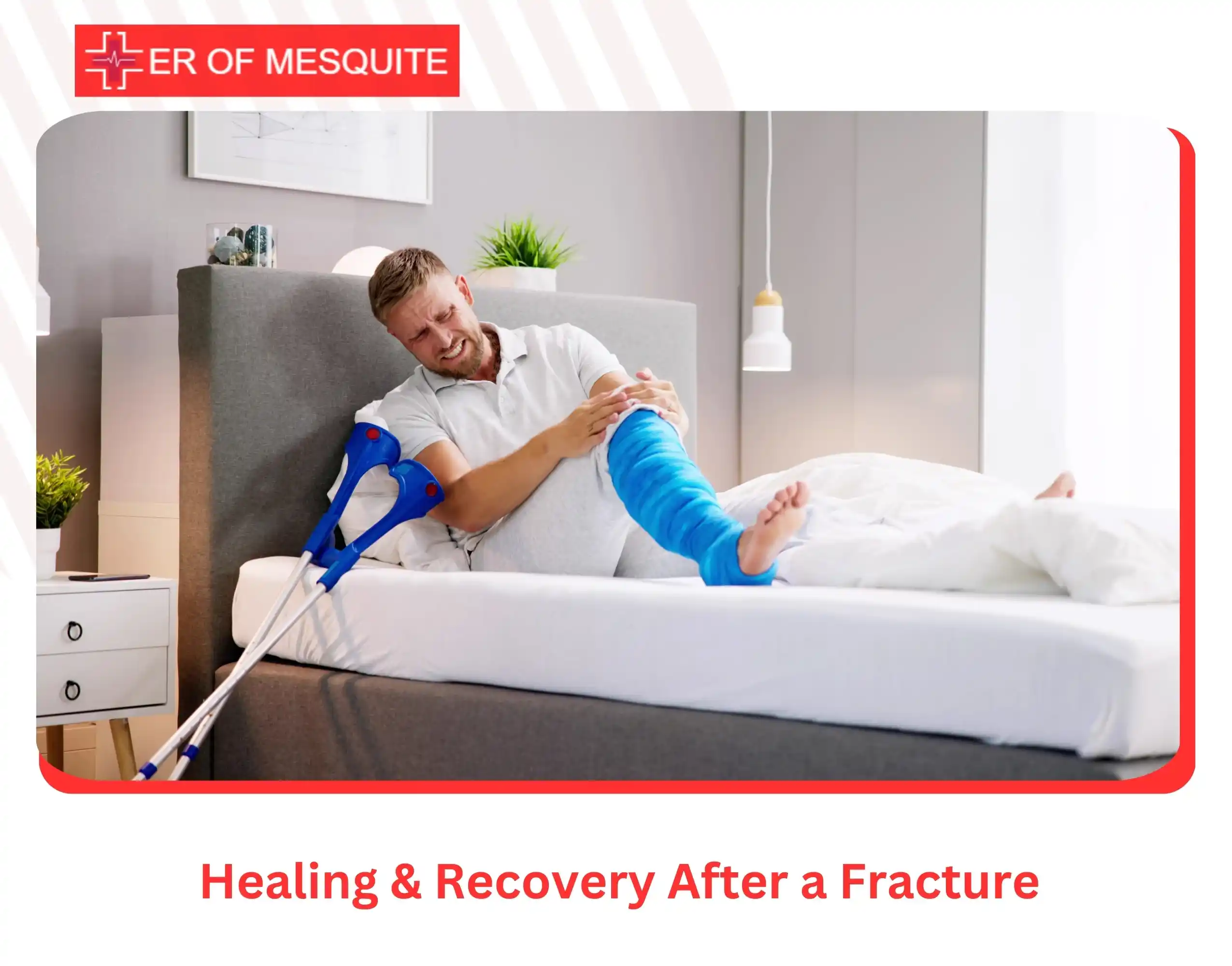
Caring for Your Cast or Splint
- Keep the cast dry — use a plastic bag in the shower
- Don’t insert anything into the cast to scratch
- Elevate the limb to reduce swelling, especially in the first week
- Wiggle fingers or toes regularly to maintain circulation
- Watch for warning signs: increasing pain, numbness, color changes, or bad odor
When You Need an Orthopedic Specialist
Most fractures need follow-up with an orthopedist within 1–2 weeks for cast removal, repeat X-rays, or surgical planning. Some fractures need an orthopedic surgeon from day one — including displaced fractures, comminuted breaks, fractures involving joints, and most pediatric growth plate injuries. We’ll make the referral and coordinate the handoff.
Physical Therapy & Returning to Activity
After the cast comes off, your muscles will be weak and your joints stiff. Physical therapy helps restore strength, range of motion, and balance — essential for athletes, manual workers, and active seniors. Returning to sports or heavy work too soon is one of the top causes of re-injury.
9. Don’t Wait — Visit ER of Mesquite for Fast Fracture Care

A broken bone treated promptly heals well. A broken bone ignored — or misdiagnosed as a sprain — can heal incorrectly, cause chronic pain, or require surgery later. At ER of Mesquite, board-certified emergency physicians are on duty 24 hours a day with on-site digital X-ray, IV pain relief, splinting, and reduction capabilities. Whether you’re an athlete with a wrist injury, a parent with an injured child, or someone recovering from a fall, you’ll get answers and broken bone treatment within minutes — not hours.
| 📍 ER of Mesquite — 24/7 Emergency Care Address: 1745 N Belt Line Rd, Mesquite, TX 75149 Phone: (214) 377-8495 Hours: Open 24 hours a day, 7 days a week, 365 days a year Walk-Ins Welcome: No appointment needed On-Site Imaging: Digital X-ray, CT scan, ultrasound Pediatric Care: Available for children of all ages Insurance: All major commercial insurance accepted |
Frequently Asked Questions About Broken Bones
Can you walk on a broken bone?
Sometimes — and that’s part of the problem. Hairline fractures, stress fractures, and small breaks in the foot or ankle may allow walking with significant pain. But continuing to bear weight can worsen the break, displace the bones, and prolong healing. If walking causes sharp or severe pain, get an X-ray.
How do I know if it’s broken or just sprained?
You often can’t tell without imaging. Signs that lean toward fracture include a snap or crack at the time of injury, immediate severe swelling, pinpoint pain over the bone, visible deformity, or inability to bear weight. The only reliable way to confirm is a digital X-ray — which we have on-site at ER of Mesquite.
Should I go to the ER or urgent care for a broken bone?
Most urgent care centers don’t have the imaging, sedation, or reduction capabilities to fully treat fractures. As a freestanding ER, ER of Mesquite has on-site digital X-ray, CT, IV pain medications, and the ability to perform reductions when needed. For any suspected fracture beyond a minor finger or toe, the ER is the better choice — and at ER of Mesquite, you won’t wait for it.
How long does it take a broken bone to heal?
Most simple fractures heal in 6–8 weeks. Smaller bones (fingers, toes) heal in 3–4 weeks; large bones (femur, hip) take 3–6 months. Children typically heal faster than adults. Smoking, diabetes, and poor nutrition can slow healing.
Will my insurance cover an ER visit for a fracture?
Most commercial insurance plans cover emergency fracture treatment, including imaging, splinting, and reduction. ER of Mesquite accepts all major commercial insurance plans. Visit our insurance coverage page or learn about our no surprise billing policy for full details. We also offer flexible payment plans for uninsured patients.
Do you treat pediatric fractures?
Yes. Children break bones differently than adults — including greenstick and buckle fractures common in falls. Our pediatric ER care team is trained to evaluate, image, splint, and refer pediatric patients of all ages, with kid-friendly care that keeps parents informed throughout.
How fast can I be seen at ER of Mesquite for a broken bone?
Most patients are evaluated within minutes of arrival. As a freestanding ER, we have no triage backups and no overcrowded waiting rooms. X-rays are read on-site immediately, and splinting or reduction is done before discharge.