

Irregular Heartbeat Emergency Care in Mesquite, TX
A heart can fail you in two directions. It can race until it cannot fill properly, or slow until it cannot supply the brain. Both feel frightening, and neither can be sorted out by counting your pulse. Our irregular heartbeat emergency room on Belt Line Road records your rhythm with an onsite EKG the moment you arrive.
No appointment. No long wait. If your heartbeat is racing, dragging, or skipping and something feels wrong, come in or call now.
Call Now: (214) 377-8495
Hours: 24/7/365
Walk-In: 1745 N Belt Line Rd, Mesquite, TX 75149
When Is an Irregular Heartbeat an Emergency?

An occasional skipped beat is usually nothing. The concern begins when the sensation persists, returns often, or brings company.
Come in immediately if an irregular heartbeat arrives with:
- Chest pain or pressure
- Shortness of breath
- Fainting, or nearly fainting
- Dizziness that will not pass
- Sudden weakness or confusion
- A resting pulse that stays above 100 or falls below 50
Two situations deserve particular attention. A resting heart rate sustained at 160 beats per minute or higher is not something the body tolerates for long. And a pulse that has dropped low enough to leave you lightheaded on standing means the brain is being shortchanged.
The heart should keep time like a metronome. When it pauses, stumbles, or gallops, an irregular heartbeat emergency room can capture what is happening on paper within minutes of your arrival, while it is still happening.
Too Fast or Too Slow: Two Different Emergencies
Most people picture a racing pulse when they think of a rhythm problem. That is only half of it, and the missing half is the one that gets ignored.
Tachycardia means a resting rate above 100 beats per minute. Some forms are harmless, like the climb during exercise. Others, particularly rhythms originating in the lower chambers, prevent the heart from filling between beats, so less blood reaches the body with each contraction. Sustained fast rhythms can progress toward heart failure or sudden cardiac arrest. A racing heart emergency is defined less by the number than by whether the heart is still doing its job at that speed.
Bradycardia means a resting rate below 60. Here is where judgment matters. Trained athletes often run in the fifties with perfectly efficient hearts. The same rate in someone else, paired with fatigue, fainting, or confusion, means the heart is no longer meeting the body’s demand. The brain claims a fifth of the blood the heart pumps, and it notices a shortfall first.
A slow heart rate emergency is easy to miss precisely because tiredness and dizziness look like ordinary life. If your pulse is low and you feel unwell, our guide on when bradycardia becomes an emergency explains what separates the two.

Is It Anxiety or Your Heart?

Anxiety produces a pounding chest, a fast pulse, and a sense of dread. So does a genuine arrhythmia. From the inside, they are close to indistinguishable, and that resemblance sends people home with the wrong explanation.
The clinical rule is straightforward. A rhythm problem gets ruled out first, and anxiety is confirmed second, never the reverse. An EKG settles in minutes what introspection cannot settle at all.
Many patients arrive already carrying an anxiety diagnosis and turn out to have a rhythm that needs treatment. Others learn their heart is entirely sound, which is its own kind of relief and opens a real conversation about panic attacks and what helps them.
Either way, you leave knowing rather than guessing.
What Happens When You Arrive at ER of Mesquite
Arrhythmias hide when you are not looking at them. The value of walking into an irregular heartbeat emergency room while symptoms are active is that we can catch the rhythm in the act.
Within minutes of arrival:
Triage and Pulse
We check your rate, rhythm, blood pressure, and oxygen, then ask when the sensation began and what it feels like.
EKG
An onsite electrocardiogram records your heart's electrical activity and identifies the rhythm. Fast, slow, regular, chaotic, the tracing tells us which.
Cardiac Enzyme Labs
Bloodwork checks whether the heart muscle is under strain, and screens electrolytes and thyroid function, both of which disturb rhythm.
Continuous Monitoring
Your rhythm is watched in real time, so changes are caught as they unfold rather than after.
Physician Evaluation
A board-certified emergency physician reads the tracing, explains what is driving the beat, and outlines the next step.
Most patients have an answer within the hour. For borderline ECG readings, our team can guide you and take a closer look to rule out ambiguity.
How We Treat an Arrhythmia
Arrhythmia treatment starts with the tracing, because the rhythm dictates everything that follows. There is no single fix for an irregular heartbeat, and applying the wrong one is worse than waiting.
Fast rhythms are slowed with medication delivered intravenously so the effect can be controlled and adjusted while we watch. Some rhythms convert back to normal on their own once the trigger is corrected.
Slow rhythms are approached differently. We look for what is suppressing the rate: an electrolyte imbalance, a thyroid problem, an infection, or a medication that is doing more than intended. Correcting the cause often restores the rate.
Reversible triggers are treated directly. Dehydration, low potassium, fever, and an overactive thyroid can each disturb rhythm, and each responds to its own correction.
Throughout arrhythmia treatment, monitoring continues. When your rhythm calls for ongoing cardiology care or a procedure, we stabilize you first and coordinate that referral directly, so you leave with a plan rather than a question.

AFib and Why It Raises Your Stroke Risk

Atrial fibrillation is the most common sustained arrhythmia, and the reason it earns its own attention has nothing to do with how it feels.
When the upper chambers quiver instead of beating cleanly, blood pools rather than moving through. Pooled blood clots. A clot that travels to the brain causes a stroke, and it can do so long before the palpitations become intolerable.
AFib emergency care therefore looks past the sensation. We identify the rhythm, assess your clot risk, stabilize the rate, and coordinate the follow-up that protects you over the coming years. An irregular heartbeat that turns out to be AFib is exactly the finding that makes an unremarkable visit worthwhile.
What Triggers an Irregular Heartbeat
Rhythm disturbances rarely appear without a reason, and the reason shapes the treatment.
Common triggers include:
- Atrial fibrillation and other primary rhythm disorders
- Electrolyte imbalances, particularly potassium, calcium, and magnesium
- Thyroid disease, which can drive the rate up or down
- Dehydration and illness, especially with fever or vomiting
- Stimulants, including caffeine, nicotine, and certain decongestants
- Medications, some of which deliberately slow the heart and occasionally overshoot
- Heart attack or existing heart disease, which disrupt the electrical pathway
Heart palpitations ER visits often end with a simple, correctable answer. They occasionally end with a diagnosis that changes the course of someone’s health. Onsite testing is what separates the two, and it takes minutes rather than weeks of waiting for a monitor.

Why Choose ER of Mesquite for Irregular Heartbeat
We Catch the Rhythm While It's Happening
Onsite EKG and cardiac labs record what a home pulse check can only guess at.
Fast and Slow Heartbeat Both Taken Seriously
Many facilities treat rhythm problems as a tachycardia question. A dropping heart rate deserves the same urgency.
Minimal Wait Times
Most patients reach an exam room within minutes, which counts when a rhythm can change by the minute.
Board-Certified Emergency Physicians
Our doctors separate a benign flutter from a dangerous arrhythmia and treat each on its own terms.
Coordinated Follow-Up
If you need a cardiologist, we arrange it directly and send you out with a clear plan.
Care That Fits Your Budget
We accept most major insurance plans and offer flexible payment plans through Sunbit, so cost never delays cardiac evaluation.
Heart Rhythm Care Near You in Mesquite
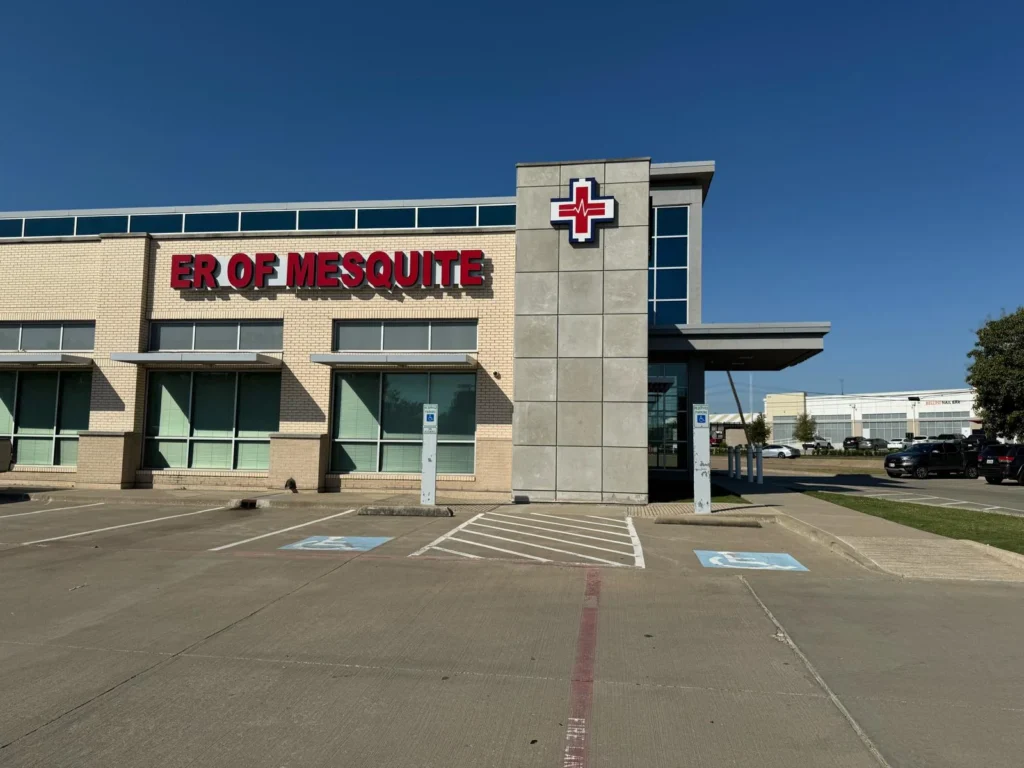
Searching for an irregular heartbeat emergency room near you? ER of Mesquite sits on North Belt Line Road and delivers 24/7 cardiac emergency care with onsite EKG, laboratory testing, and continuous monitoring.
We treat patients from:
- Mesquite
- Balch Springs
- Forney
- Garland
- Sunnyvale
- Rowlett
- Sachse and nearby communities
No appointment. No excessive wait. Just a real reading of what your heart is doing, whether it is racing or dragging. Our doors stay open day and night, holidays included.
We're Open 24/7
Rhythms do not wait for office hours. They announce themselves at 2 a.m., in the middle of a shift, or on a couch after an ordinary dinner.
If your heartbeat feels wrong and will not settle, do not spend the night wondering. Walk in or call ahead, and we will tell you exactly what your heart is doing.
Call Now: (214) 377-8495
Hours: 24/7/365
Walk-In: 1745 N Belt Line Rd, Mesquite, TX 75149

FAQs
When should I go to the ER for an irregular heartbeat?
Go right away if the irregular beat comes with chest pain, breathlessness, fainting, or dizziness. Also come in for a resting pulse above 100 or below 50 that will not settle, since both can leave the body underserved.
Is a slow heart rate dangerous?
It depends on you. Trained athletes often rest in the fifties without any problem. The same rate paired with fatigue, fainting, or confusion signals that the heart is not meeting demand, which makes it a slow heart rate emergency worth evaluating.
How can I tell anxiety from a real arrhythmia?
You cannot, reliably, and neither can most clinicians without a tracing. An EKG records the actual rhythm in minutes. The correct order is to rule out a heart problem first, then address anxiety.
What will the ER do for heart palpitations?
We run an EKG to identify the rhythm, draw cardiac enzyme labs to check for heart strain, screen electrolytes and thyroid, and monitor you continuously. Arrhythmia treatment follows the diagnosis, and we coordinate cardiology care when it is needed.
Can dehydration cause an irregular heartbeat?
Yes. Fluid loss and electrolyte imbalance disturb the heart’s electrical signaling, particularly after illness, heat, or heavy exertion. Rehydration often resolves it, though testing confirms nothing more serious is behind it.
Should I go to urgent care instead?
Urgent care can take a pulse and may run a basic tracing, but rhythm emergencies need cardiac labs, continuous monitoring, and a physician who can act on what appears. An irregular heartbeat emergency room provides all of it in one visit.
Do you accept insurance and walk-ins?
Yes. Walk in any hour without an appointment. We accept most major insurance plans and offer flexible payment plans through Sunbit.